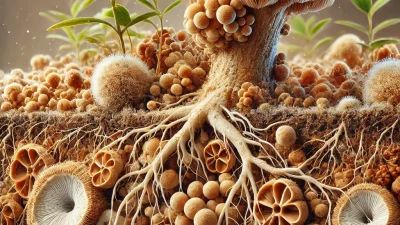

Piloderma species, are known as ectomycorrhizal fungi belonging to the phylum Basidiomycota.These fungi support plants’ water and nutrient intake, thanks to the symbiotic relationships they establish with the roots of trees, and play an important role in the healthy functioning of forest ecosystems.Piloderma species, which belong to the group of ectomycorrhizal fungi, establish a mutually beneficial relationship between the plant and the fungus by creating threadlike structures called hyphae on the surface of plant roots.The prevalence of these fungi in nature and their contribution to ecosystems is quite remarkable.Here are all the details you need to know about Piloderma types!Scientific Name and Other Names of Piloderma Species The scientific name of Piloderma mushrooms is Piloderma, which is the genus name.This genus belongs to the Basidiomycota phylum and Agaricomycetes class, and is widely distributed in forest ecosystems with its various species.The most well-known species include Piloderma croceum and Piloderma fallax.Piloderma species, classified as ectomycorrhizal fungi, help forests remain productive thanks to the close symbiotic relationship they establish with plant roots.The term ectomycorrhizal fungus comes from the fact that these fungi wrap around the outer surface of plant roots and form a structure that enables nutrient exchange.Thanks to this relationship they establish with plants, Piloderma mushrooms both support the growth of plants and improve soil health.Regions Where Piloderma Species Occur Piloderma species can be found in different climates and soil types around the world.They are commonly seen in forest areas with temperate and cold climates.They are frequently found on the roots of trees such as pine, fir, spruce and oak.These types of fungi are found in forest-rich areas, especially in North America, Europe and Asia.In Turkey, Piloderma species are common in forest areas in the Black Sea, Marmara and Aegean regions.Pine forests and deciduous tree species in these regions of Turkey provide a suitable living environment for the development of Piloderma fungi.It is possible to encounter Piloderma species on moist forest floors, among leaf litter and rotting woody materials.The presence of these fungi in forest areas increases the biodiversity of forest ecosystems and contributes to soil fertility.Physical Characteristics of Piloderma Species Piloderma species are microscopic fungi that form thin filamentous structures called hyphae.Hyphae wrap around plant roots, covering the surface of the roots and forming an ectomycorrhizal structure.This structure acts as a network that regulates nutrient and water exchange between plant roots and fungi.Thanks to these features, Piloderma species establish a close symbiotic relationship with the roots of forest trees and optimize their nutritional processes.Fruit bodies of Piloderma species are generally small, delicate and can be examined under a microscope.Fruit bodies can be shades of yellow, orange or light brown and they develop among decaying leaves on the moist forest floor.Its spores are microscopic in size and spread in the soil, allowing the fungus to connect with new root systems.These features enable the fungus to spread over a wide area on the forest floor and to be in constant contact with plant roots.Growing Habitat and Season of Piloderma Species Piloderma species generally prefer moist and acidic soils rich in organic matter.They survive on the forest floor, among leaf debris and dead plant materials. They attach tightly to plant roots, facilitating their access to nutrients and water.During these periods of increased rainfall, the moisture level of the soil increases and Piloderma species further strengthen their relationships with plant roots.Their activity may decrease when there is drought in the summer, but they become active quickly when the humidity level increases again.They can survive in the soil during the winter months, thanks to their structure that is resistant to low temperatures.The Role of Piloderma Species on the Ecosystem Piloderma species play a key role in the healthy functioning of forest ecosystems.These fungi increase the plants’ uptake of water and nutrients from the soil, thanks to the ectomycorrhizal relationships they establish with plant roots.They enable plants to use nutrients limited in the soil, especially phosphorus and nitrogen, more effectively.This process increases the growth rate and durability of forest trees and preserves the biodiversity of forests.Another important benefit provided by piloderma mushrooms is their ability to improve soil structure and increase water retention capacity.Thanks to their hyphae structure, they create microscopic channels in the soil, allowing water to move more evenly through the soil.This makes it easier for plants to access water during dry periods and helps them cope with drought stress.Additionally, these fungi accelerate the decomposition process of organic matter, allowing nutrients to return to the soil and enriching the organic matter content of the soil.Agricultural and Economic Importance of Piloderma Species Although Piloderma species are not used directly to obtain agricultural products, they have an important place in protecting the health of forest areas and in tree cultivation.Thanks to their ectomycorrhizal relationships, they contribute to the rapid growth of trees and their resistance to environmental stresses such as drought.In forest reforestation projects, the presence of Piloderma species can help strengthen the root systems and healthy growth of young trees.From an agricultural perspective, the ability of these fungi to maintain the natural balance of the soil may indirectly benefit organic farming practices.Mycorrhizal support provided by Piloderma species, especially when growing woody plants such as pine, spruce and oak, can increase agricultural productivity and improve soil health.This contributes to the spread of environmentally friendly agricultural practices by reducing the use of chemical fertilizers.Interesting Information and Cultural Importance Piloderma species have attracted great attention in the scientific world thanks to their role in nature and their close relationships with plants.By studying the symbiotic relationships these fungi form with their root systems, mycologists have gained a better understanding of the effects of mycorrhizal processes on plant growth.Such studies have provided important insights into how plant-fungal symbiosis functions in ecosystems.Culturally, Piloderma mushrooms are also important for nature-friendly living and environmental awareness.Societies living in close proximity to forest areas have become aware of the ecological benefits provided by these mushrooms and understand the importance of these natural processes for the protection of forests.Nowadays, the existence of Piloderma species is more appreciated as part of environmentally friendly agriculture and sustainable forest management strategies.Piloderma species play a critical role in supporting forest ecosystems and plant growth. The importance of these fungi in ecosystems and forest management provides a great opportunity to understand how they play a role in natural processes.Frequently Asked Questions What are the types of piloderma?Piloderma species are mycorrhizal fungal species that establish an ectomycorrhizal relationship with plant roots and support their nutrient and water uptake.Where are the regions where piloderma fungi are common?These fungi are common in forested areas around the world, especially in temperate and cold climates.They are frequently seen in the Black Sea, Marmara and Aegean regions of Turkey.What are the contributions of Piloderma species to the ecosystem?It improves the structure of the soil, regulates the movement of water in the soil and facilitates plants’ access to water and nutrients.Which plants do piloderma species form a symbiotic relationship with?It establishes symbiotic relationships with pine, spruce, fir, oak and other forest trees and helps them grow.How are these mushrooms used in agriculture?It can be used in afforestation of forest areas and organic farming practices to support the growth of plants by maintaining soil health.Why are Piloderma species important for forest health?The ectomycorrhizal relationships it establishes with plant roots contribute to the healthy growth of trees and the preservation of the biological diversity of forests…
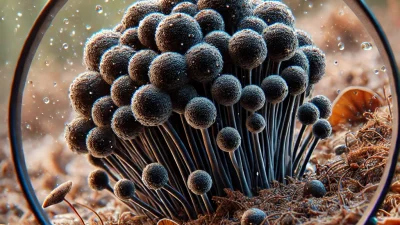
Cenococcus geophilus (Cenococcus geophilus)
Cenococcum geophilum is a species of fungus that occurs all over the world and forms ectomycorrhizal relationships.This fungus establishes…