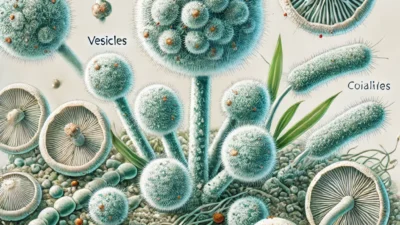
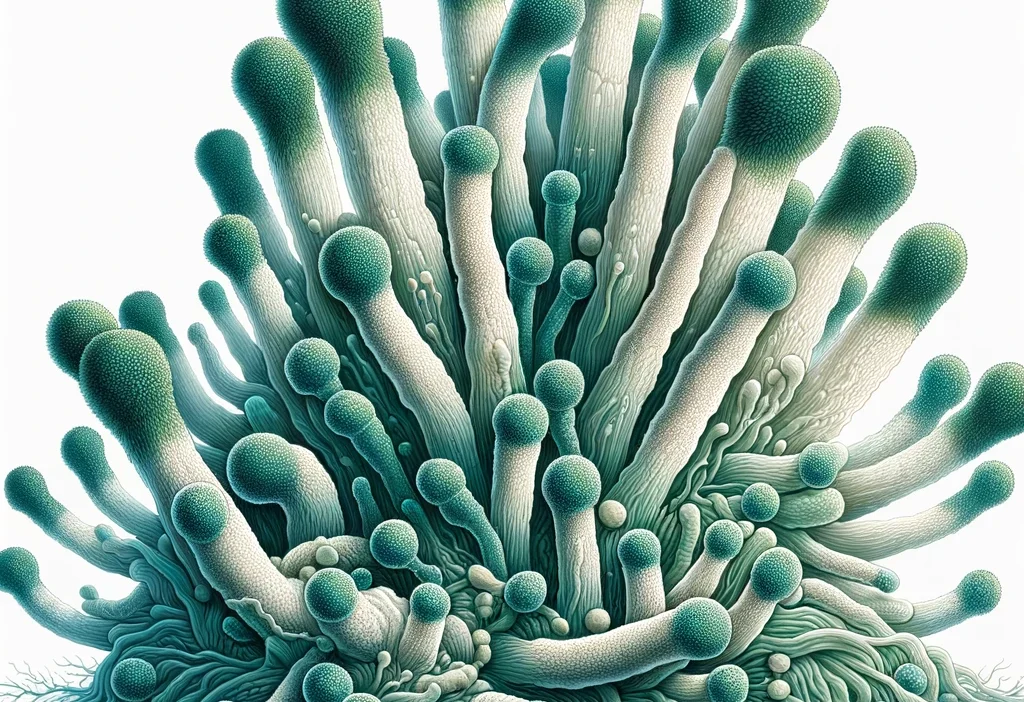
Penicillium roqueforti is a type of mold used in cheese production and is especially identified with blue-veined cheeses.This mushroom, which creates the unique taste and characteristic blue veins of the world-famous Roquefort cheese, has an important place not only in the world of cheese but also in the field of biotechnology and microbiology.In this article, we will discuss every aspect of Penicillium roqueforti, from its scientific properties to its habitat in nature and cultural importance.Scientific Name and Other Names Penicillium roqueforti is a species belonging to the Penicillium genus and its scientific name is as follows.The name of this species comes from the town of Roquefort in France.This town is famous for its blue-veined Roquefort cheese, produced using traditional methods.Penicillium roqueforti is also called blue mold or blue cheese mold and is often associated with cheese production.Areas of Occurrence and Physical Characteristics Penicillium roqueforti is a mold fungus commonly found in nature.It is especially common in environments rich in organic matter, such as soil, decaying plants and grains.This type of fungus grows rapidly in moist and temperate environments.However, it is specially grown under controlled conditions in commercial production and cheese making.When examined microscopically, the spore structures of Penicillium roqueforti exhibit a brush-like structure and its spores are greenish-blue in color.These spores penetrate the inner tissue of the cheese, creating blue-green veins.Their spore-producing structures are surrounded by small structures called conidia, and these structures produce spores that can be easily dispersed in the air.Growth Habitat and Reproduction Method Penicillium roqueforti thrives in environments rich in moist and organic matter.Rotten plants, grain stores and cheese surfaces are the natural habitats of this fungus.In cheese making, it is cultured under special conditions and grown in a controlled manner.This fungus penetrates the structure of the cheese and breaks down milk proteins and fats, thus giving the cheese a characteristic aroma and blue veins.Penicillium roqueforti is a fungus capable of asexual reproduction and reproduces through spores called conidia.These spores can easily spread through the air and quickly form colonies under suitable conditions.In cheese making, spores are added to the cheese in a controlled manner and their development is ensured under appropriate moisture and temperature conditions.Season and Harvest Time of Penicillium roqueforti The reproduction of Penicillium roqueforti in nature is not affected by seasonal conditions;However, it develops faster in humid and warm environments.In cheese making, controlled production can be done throughout the year.The development of fungi is important during the ripening process of cheese and the cheese must be stored in the right conditions during this process.Therefore, the growth and spore production processes of Penicillium roqueforti used in cheese production are adjusted according to the production period.Penicillium roqueforti and its Role in Cheese Production Penicillium roqueforti is a key ingredient used in the production of blue-veined cheeses.It is especially used in the production of famous cheeses such as Roquefort, Gorgonzola, Stilton and Danablu.This fungus enters the structure of the cheese and breaks down the milk proteins and fats, and as a result of this process, the cheese’s unique sharp, strong aroma and blue veins are formed.After Penicillium roqueforti is injected into cheese, it begins to develop with the presence of oxygen in the cheese.Penetrating into the cheese, the fungus produces enzymes that break down lactic acid, giving the cheese its characteristic texture.Additionally, these enzymes affect the creaminess and flavor profile of the cheese.The unique sharp taste and strong aroma of blue cheeses occur as a result of the activity of Penicillium roqueforti. The Roquefort cheese produced in this town is made using the Penicillium roqueforti culture grown only in this region and has geographical indication protection.
Frequently Asked Questions What is Penicillium roqueforti?Penicillium roqueforti is a type of mold used to make blue-veined cheeses.This fungus provides the cheese with its characteristic blue veins and pungent aroma.How to use Penicillium roqueforti?Penicillium roqueforti is used as a culture in cheese making and is injected into cheese.Penetrating into the cheese, the fungus breaks down milk proteins, creating blue veins.In which cheeses is Penicillium roqueforti found?This type of mushroom is used to make blue-veined cheeses such as Roquefort, Gorgonzola, Stilton and Danablu.Is Penicillium roqueforti harmful?Penicillium roqueforti strains used for cheese production are generally safe and not harmful.However, some strains can cause unwanted mold growth on foods.Under what conditions does Penicillium roqueforti grow?Penicillium roqueforti grows rapidly in moist and organic matter-rich environments.It is cultured under controlled conditions in cheese making.What is the role of Penicillium roqueforti in cheese?This fungus penetrates the cheese, breaks down the milk proteins and gives the cheese a unique taste and aroma.The characteristic blue veins of blue cheeses are formed thanks to the development of this fungus.Penicillium roqueforti is a unique type of mold fungus that plays an indispensable role in cheese production.This fungus, which gives the characteristic features of blue-veined cheeses, has an important place both in the world of gastronomy and biotechnological applications.Penicillium roqueforti, which is famous worldwide for the rich taste profile and aroma it brings to cheeses, also has an important cultural place in the culinary heritage of France and many European countries.In this article, we examined many details of Penicillium roqueforti, from its scientific properties to its role in cheese making and its cultural value.Getting to know Penicillium roqueforti helps us better understand the flavors this unique mushroom offers…