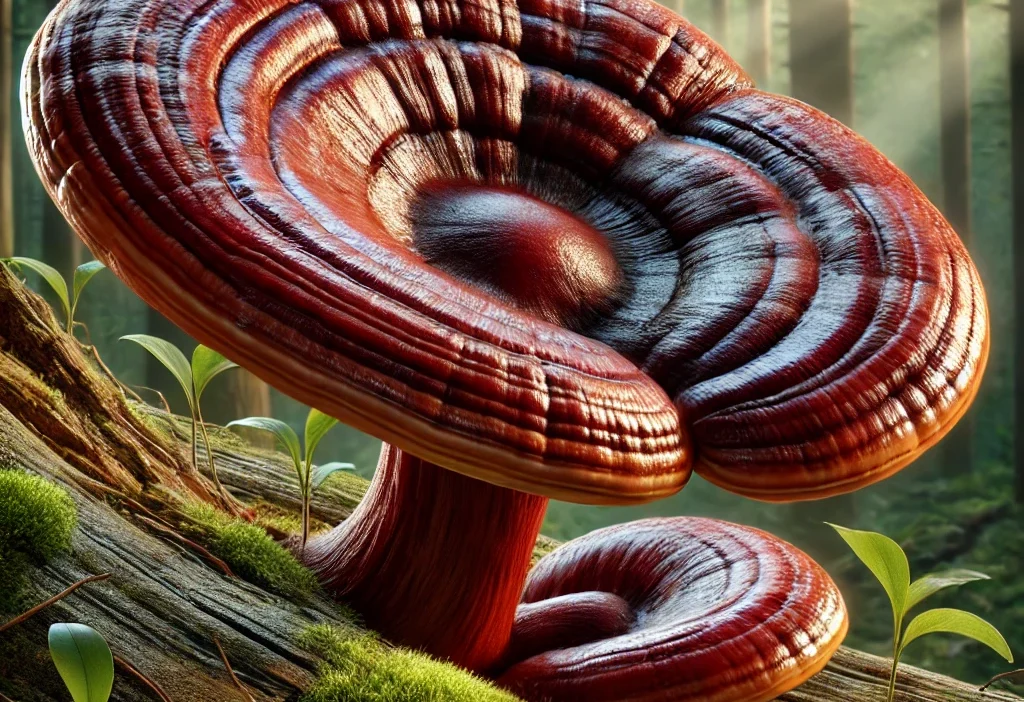
Reishi Mushroom, scientifically known as Ganoderma lucidum, is a type of mushroom of Asian origin that has been used for centuries for its medicinal properties.This mushroom, which has an important place in traditional Chinese medicine, is known for supporting the immune system and contributing to health.In this article, we will present a comprehensive guide to the Reishi Mushroom, from its physical properties to its growing conditions, from its cultural importance to its interesting information.Scientific Name: Ganoderma lucidum The scientific name of Reishi Mushroom is Ganoderma lucidum, which means “shiny skin” in Latin.This name refers to the bright and polished appearance on the surface of the mushroom.While it is known as “Reishi” in Japan, it is called “Lingzhi” in China.These names reference the mushroom’s various cultural and medicinal uses.Other Names Reishi Mushroom is known by various names in different cultures and languages.While it is called “Lingzhi” (Mushroom of Immortality) in China, the name “Reishi” is common in Japan.In English, it is known as “Polished Mushroom” or “Red Reishi”.These names emphasize both the physical structure and cultural value of the mushroom.Areas of Occurrence and Physical Characteristics Reishi Mushroom is naturally found in the subtropical and tropical forests of Asia.It is especially common in China, Japan and Korea.Although it is rare in Turkey, it can be found in moist forest areas and the roots of trees such as beech and oak.It is also common to grow it under controlled environmental conditions.Physically, Reishi Mushroom has a large and woody structure.The hat part usually has a color ranging from red to brown and has a bright and polished appearance.The hat diameter can vary between 5-20 cm and has an irregular structure resembling a kidney shape.The white or pale yellow spore layer on the bottom turns brown as it matures.The stem of the Reishi Mushroom is short and strong.These features enable the mushroom to be easily recognized in nature.Growing Habitat and Season Reishi Mushroom usually grows on dead or decaying trees.It grows at the base of tree trunks or on stumps in soil rich in organic matter.It is frequently found in areas with broad-leaved trees such as beech, oak and maple.The growing environment can affect the concentration of bioactive compounds contained in the fungus.The growing season naturally lasts from late spring to autumn.However, today it is possible to grow it in greenhouses and controlled environments throughout the year.Especially in Asia, the cultural production of this mushroom has become widespread and it has begun to be widely traded.Benefits and Nutritional Values of Reishi Mushroom Reishi Mushroom is used as a source of healing in traditional and modern medicine thanks to its rich content.The polysaccharides, triterpenoids, beta-glucans and peptides it contains help strengthen the immune system and protect the body from free radicals.Among the benefits of Reishi Mushroom, the following stand out:
- Immune System Supporter: It strengthens the immune system thanks to the beta-glucans and polysaccharides it contains.It makes the body more resistant to infections and diseases.
- Antioxidant Properties: Helps prevent cellular damage caused by free radicals.This feature contributes to the delay of signs of aging.
- Stress and Anxiety Reducer: Reishi is among the herbal products known as adaptogens. In addition, it contributes to body health by containing minerals such as potassium, iron and magnesium.is available.In traditional Chinese medicine, it is believed to prolong life and strengthen the body.It is known that reishi was historically reserved exclusively for emperors and limited to access by ordinary people.This shows how valuable the mushroom is considered.In the modern era, the popularity of Reishi Mushroom has spread from Asia to America and Europe.Reishi, which is among the medicinal plants and natural supplements, is found in various health supplements and teas.It has gained great popularity among people who are interested in natural treatment methods.Cultivation and Commercial Production of Reishi Mushroom Reishi Mushroom is a type of mushroom that can be easily grown under controlled environmental conditions.Today, it is grown in greenhouses and laboratory environments using organic materials such as wood sawdust or compost.Its commercial production is widespread in Asia, especially in China and Japan, from where it is exported to the world market.During cultivation, the ambient temperature and humidity level of the mushroom should be carefully controlled.A moist and warm environment allows the fungus to grow quickly.Thanks to commercial production, it becomes possible to benefit from the health benefits of Reishi Mushroom all year round.Use of Reishi Mushroom in the Culinary Reishi Mushroom is generally not consumed directly by cooking due to its hard and woody structure.However, it can be consumed as a health supplement in tea, powder or extract form.Reishi tea is made by slicing and boiling mushrooms and has a slightly bitter taste.This tea is especially consumed to strengthen the immune system and increase energy levels.Reishi mushroom powder can also be added to drinks such as coffee and smoothies.Reishi mushroom supplements can be found in capsule or tablet form, especially in stores selling wellness products.These products make it possible to practically benefit from the health benefits of Reishi in daily life.Interesting Facts About Reishi Mushroom
- Reishi Mushroom is called the “Mushroom of Immortality” and is considered a symbol of spiritual peace, health and long life in Asian cultures.
- Traditional ChineseIn medicine, Reishi is thought to protect against insomnia, stress, and heart health problems.
- Due to Reishi’s hard structure and woody texture, it is not used directly in meals;It is consumed in the form of tea, powder or extract.
- Since the mushroom is difficult to find in nature, it has had a high value in many periods of history and in some societies it could only be consumed by the elite.
Reishi Mushroom andPoisonous Similarities Although the Reishi Mushroom is generally a safe and recognizable species, it is associated with some poisonous species that have a similar appearance.can be mixed.Therefore, it is important to be careful when collecting from the wild and ensure correct identification of the mushroom.To distinguish it from poisonous species, the woody structure and shiny surface of the mushroom should be taken into consideration.Reishi Mushroom Reishi Mushroom, scientifically known as Ganoderma lucidum, is known as a healing treasure offered by nature.With its place in traditional medicine and its contributions to modern health, this mushroom offers a unique natural support for people seeking health.When used correctly, it is possible to benefit from the immune system-supporting and spiritual balance-protecting effects of Reishi Mushroom. It is especially popular among natural health support products.How to use Reishi Mushroom?Reishi Mushroom is often used in tea, powder or capsule form.Due to its hard structure, it cannot be cooked or consumed directly.In which season does Reishi Mushroom appear?It can be found in nature in spring and autumn, but can be grown year-round under controlled environmental conditions.What are the benefits of Reishi Mushroom?It strengthens the immune system, reduces stress and anxiety, and prevents cell damage by providing antioxidant properties.Why is Reishi Mushroom expensive?Reishi Mushroom is rare in the natural environment and growing in culture requires care.Therefore, high demand and production costs increase its price…