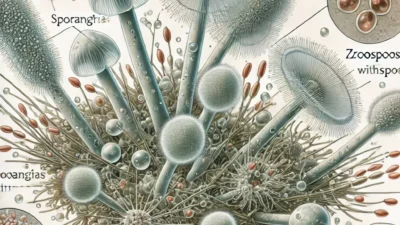
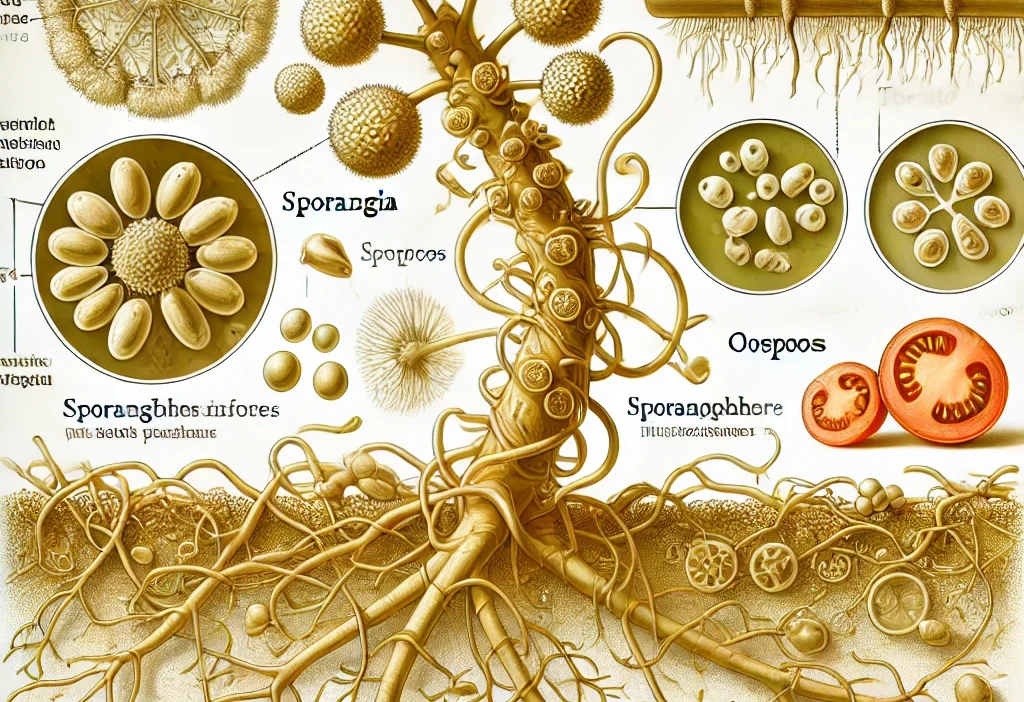
Phytophthora infestans is a species of oomycete (pseudofungus) that causes serious diseases, especially in potato and tomato plants, and causes significant damage to global agriculture.This disease, known as potato downy mildew, can cause great economic damage to producers by causing loss of productivity in potato fields.This fungus-like organism made its mark in history by causing a major potato famine in Ireland in the 19th century.In this article, we will provide comprehensive information about Phytophthora infestans, from its scientific features to its natural habitat, from its agricultural effects to its cultural importance.Scientific Name and Other NamesThis organism, whose scientific name is Phytophthora infestans, belongs to the phylum Oomycota (pseudofungi) and can cause great destruction on plants.The word Phytophthora comes from the combination of the Greek words “phyto” meaning “plant” and “phthora” meaning “destroyer” and draws attention to its ability to harm plants.It causes the disease known as potato downy mildew and may also be referred to as “potato blight” or “late blight” in some sources.Areas of Occurrence and Physical Characteristics Phytophthora infestans is common throughout the world and causes serious damage in agricultural areas in temperate climates.This pathogen, which is frequently encountered especially in regions where potatoes and tomatoes are grown, can cause infection in plant leaves, stems and fruits.It is most common in the Americas, Europe and Asia, in regions where intensive potato production occurs.When examined under the microscope, the mycelial structure of Phytophthora infestans is seen to be unsegmented and tubular.This organism produces spores called zoospores that are capable of locomotion.Zoospores can swim in the water environment and attach to the surface of plants, and thus puddles and rainy weather conditions facilitate the spread of spores.Spores of Phytophthora infestans initiate infection by settling in plant tissues and can spread rapidly in plant tissues.It forms colonies ranging from white to gray in the culture medium, and spore production increases in rainy and cool weather.Growth Habitat and Reproduction Mode Since Phytophthora infestans lives a water-dependent life, it grows and spreads rapidly in moist and cool environments.It can directly damage plant tissues and cause epidemics in fields during rainy seasons.Leaves, stems and fruits of potato and tomato plants are the organs most frequently targeted by this pathogen.Long-term moist environments are required for the infection to begin, and water accumulated on the soil surface after rain provides an ideal environment for the spread of spores.Phytophthora infestans asexually produces motile spores called zoospores.These zoospores swim in the aquatic environment, attach to plant surfaces and initiate infection.Sexual reproduction occurs through the union of structures called oogonium and antheridium, and resistant oospores are formed in this process.Oospores are resistant to adverse environmental conditions and can overwinter in the soil and germinate again in the spring.Thanks to these resistant structures, Phytophthora infestans can reoccur annually and cause epidemics.Season and Spread Period of Phytophthora infestans Phytophthora infestans becomes more active in cool and moist conditions.The rate of spread increases, especially in spring and autumn, when rainfall and low temperatures are effective.During this period, the accumulation of water droplets on the leaves of plants accelerates the spread of zoospores.If cool and rainy weather conditions continue in the summer months, epidemics may become more severe. In agricultural areas, in fields where plants are grown intensively, epidemics can spread rapidly and lead to large crop losses in a short time.Therefore, controlling weather conditions and field water flow is of great importance in combating Phytophthora infestans.Phytophthora infestans and its Effects on Agriculture Phytophthora infestans is a plant pathogen that causes serious damage to potato and tomato production worldwide.It causes the disease known as potato downy mildew, and this disease can affect the entire plant, starting from the leaves of the potato.Disease symptoms include brown spots on leaves, yellowing of leaf edges, rot on stems, and rot on potato tubers.As the infection spreads, plants begin to wilt and yield is severely reduced.The problems caused by Phytophthora infestans in agricultural production are as follows:
- Potato Downy mildew: It is the most common disease caused by Phytophthora infestans and causes yield loss in potato fields.It creates spots and rots on the leaves, reducing the photosynthesis capacity and weakening the plant.
- Tomato Downy mildew: It also infects tomato plants, causing brown spots and rots on the leaves, fruits and trunk.This disease is also an important problem in tomato production and negatively affects the harvest.
- Economic Losses: Phytophthora infestans causes global economic losses of billions of dollars in potato and tomato production.Therefore, early diagnosis and effective management of the disease is important.
In the fight against this disease, chemical fungicides, development of resistant plant varieties and compliance with hygiene rules in the agricultural field are of great importance.Additionally, regular inspection of vegetation and rapid removal of diseased plants from the field are among the critical measures to prevent the spread of infection.Interesting Facts About Phytophthora infestans
- Caused Potato Famine in Ireland: Phytophthora infestans caused a great potato famine in Ireland in the 1840s, and this event caused a hundredIt caused thousands of people to migrate and thousands of people to die.
- Known as Pseudofungus: Phytophthora infestans is biologically classified as an oomycete (pseudofungus), not a fungus, and therefore has a different biological structure.
- Zoospores Are Motile: Zoospores of Phytophthora infestans, thanks to their flagellaIt can swim in the aquatic environment and this feature allows it to spread rapidly in puddles.
- An Important Goal in Plant Breeding: Agricultural research has focused on the development of potato and tomato varieties resistant to Phytophthora infestans.These studies are of great importance to reduce crop loss in agriculture.
Frequently Asked Questions What is Phytophthora infestans?Phytophthora infestans is a species of oomycete that causes serious diseases in potato and tomato plants and can cause great damage in agriculture.It causes potato downy mildew.How is Phytophthora infestans spread?Motile spores called zoospores spread in the aquatic environment.Spores can be carried to large areas by wet weather conditions, wind and contaminated plant materials.In which plants does Phytophthora infestans cause diseases?It causes potato downy mildew and tomato downy mildew diseases in potato and tomato plants. How can Phytophthora infestans infections be controlled?Chemical fungicides, use of resistant plant varieties and good drainage systems are important for controlling infection.Removing infected plants from the field also prevents spread.In which season is Phytophthora infestans most common?It becomes more active in cool and humid conditions, and the risk of spread increases especially in spring and autumn.Is Phytophthora infestans a fungus?Phytophthora infestans, although similar in appearance to fungi, belongs to a biologically distinct group, the phylum oomycota (pseudofungi).Phytophthora infestans is the main cause of the disease known as potato downy mildew, which causes serious problems in agricultural production.This pathogen, which spreads rapidly in cool and moist conditions, infects the leaves, stems and fruits of plants, causing major crop losses.In this article, we presented a broad overview of Phytophthora infestans, from its scientific features to its agricultural effects and historical importance.Fighting Phytophthora infestans is critical for maintaining agricultural productivity and preventing economic losses…