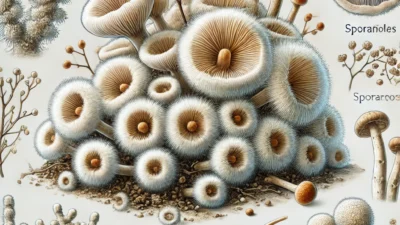

Mucor mucedo is a common mold fungus belonging to the Zygomycetes class and grows especially rapidly on decaying organic matter.Mucor species play an important role in the decomposition of organic matter in nature and prefer moist, organic-rich environments.This type of fungus, which we can encounter at home on moldy food or on moist soil surfaces, is also the subject of important studies in the field of microbiology and biotechnology.In this article, we will give detailed information about Mucor mucedo, from its scientific properties to its natural habitat, from its effects on health to its cultural importance.Scientific Name and Other Names This mushroom, whose scientific name is Mucor mucedo, belongs to the Mucoraceae family and is one of the important members of the Zygomycetes class.It is commonly known as “white mold” or “cottony mold” because its colony structure has a whitish and cottony texture.When viewed under the microscope, spores appear to form on long and branched structures.The name “Mucor” means mold in Latin and refers to the rapid growth of the fungus on decaying organic matter.Regions Where It Occurs and Its Physical Characteristics Mucor mucedo is widely found around the world in humid and organic-filled environments.It grows especially frequently on moist soil, decaying plant and animal remains, animal feces and spoiled food.It can be easily observed on moldy foods in agricultural areas, humid warehouses and homes.Physically, Mucor mucedo is a microscopic fungus.Colonies range in color from white to gray and may turn brown or black as the spores mature.When examined under a microscope, the fungus appears to have long, thin and branched hyphae.Spore sacs called sporangium form at the ends of these hyphae.When the spores mature, the spores inside the sporangium disperse to the environment and form new colonies on suitable surfaces.The way the colonies grow gives the fungus a cottony appearance.Growth Habitat and Reproduction Method Mucor mucedo grows rapidly in moist and organic matter-rich environments.Especially animal manure, compost piles, rotten leaves and spoiled foods are the natural habitats of this fungus.It can grow rapidly on the surface of foods such as bread, fruits and vegetables and can spread over large areas when the appropriate environment is provided.Mucor mucedo is a fungus capable of both asexual and sexual reproduction.During asexual reproduction, spores are produced within structures called sporangium.These spores disperse into the environment and form new colonies when appropriate humidity and temperature conditions are provided.During sexual reproduction, thick-walled structures called “zygospores” are formed.Zygospores enable the fungus to survive in adverse environmental conditions and develop to form a new fungal colony when suitable conditions occur.Season and Harvest Time of Mucor mucedo Mucor mucedo can be active throughout the year;However, it reproduces faster in hot and humid conditions.While it is more active outdoors in spring and summer, it can develop indoors in winter, especially in humid and unventilated environments.If the storage conditions of bread, fruits and vegetables are not suitable, it is possible to encounter Mucor mucedo at any time of the year.To prevent the spread of fungus in homes, it is important to keep food under appropriate humidity and temperature conditions.Mucor mucedo and its Effects on Health Mucor mucedo may cause some health risks in individuals with weakened immune systems.It can cause a serious infection called “mucormycosis”, especially in people with immunodeficiency problems and chronic diseases such as diabetes. However, in healthy individuals, Mucor mucedo does not usually cause a direct health problem.Symptoms such as sneezing, runny nose, and watery eyes may be observed.Therefore, regular cleaning, humidity control and good ventilation are important to reduce the presence of fungus in indoor environments.Interesting Facts About Mucor mucedo
- Biotechnological Uses: Mucor mucedo and other Mucor species are used in industrial enzyme production and in the production of some fermented products.The ability of these fungi to produce enzymes such as proteases and lipases is valuable in various biotechnological processes.
- Rapid Expansion Ability: Mucor mucedo can form large colonies in just a few days under suitable humidity and temperature conditions and is therefore particularlyIt is frequently encountered in spoiled foods.
- Natural BiodegradationAgent: In nature, it plays an important role in the decomposition of decaying plant materials and animal waste.This feature enables Mucor to contribute to the cycle of organic matter in the ecosystem.
- Mucormycosis: Mucor-induced mucormycosis infections have been reported in some patients, especially during the COVID-19 epidemic.This situation has once again brought the possible effects of Mucor species on health to the agenda.
Frequently Asked Questions What is Mucor mucedo?Mucor mucedo is a type of mold fungus that grows rapidly on decaying organic matter and thrives especially in moist environments.It is frequently seen on bread and fruits.How does Mucor mucedo reproduce?Mucor mucedo reproduces asexually by producing spores within structures called sporangium.Spores rapidly form new colonies on suitable moist surfaces.In what conditions does Mucor mucedo live?Mucor mucedo grows rapidly in moist, warm environments rich in organic matter.It often develops on animal manure, rotting leaves and spoiled food.Is Mucor mucedo harmful?It can cause serious infections called mucormycosis in individuals with weak immune systems.In healthy individuals, it is generally not harmful;However, it may cause allergic reactions.What is the biotechnological use of mucor mucedo?Mucor mucedo can be used in biotechnological applications such as industrial enzyme production and fermented food production.It takes part in various biochemical processes thanks to its ability to produce enzymes.In which season is mucor mucedo common?Mucor mucedo grows faster in warm and humid conditions;However, it can be seen in closed areas at any time of the year when a suitable environment is provided.Mucor mucedo is a type of mold fungus commonly found in nature that contributes to the decomposition of decaying organic matter.It is important due to its rapid growth in foods and its potential in biotechnological applications.However, the fact that it can cause health problems in individuals with weak immune systems indicates that it should be handled with caution.In this article, we presented a broad overview of Mucor mucedo, from its scientific properties to its health effects and cultural significance.Knowing Mucor mucedo makes it possible to act more consciously in terms of both food safety and health…