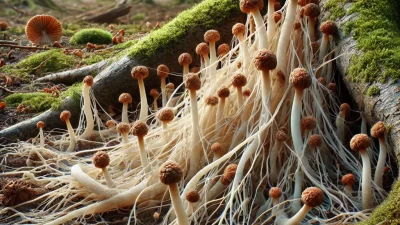

Laccaria species are a genus of mushrooms that are frequently encountered in nature and some species are edible.These mushrooms, which can grow in various climates and different soil conditions, play an important role in ecological balance.You can find all the details about the biological characteristics, growing areas and cultural importance of Laccaria mushrooms in this article.Scientific Name and Other Names The scientific name of Laccaria mushrooms is Laccaria and there are dozens of different species under this genus.The most commonly known species include Laccaria laccata (Painted Laccaria) and Laccaria amethystina (Purple Laccaria).Among the public, these mushrooms are sometimes called “pink mushrooms” or “forest mushrooms”.The name Laccaria species comes from the bright, vibrant colors on their caps and lamellae.Areas of Occurrence Laccaria species are widely found in forest areas of temperate and tropical climate zones.It is frequently found in the moist forests of Europe, North America, Asia and Australia.In Turkey, it is common in the moist forest areas of the Black Sea and Marmara regions.These fungi, which survive by establishing symbiotic relationships with tree species such as pine, beech, oak and chestnut, can grow harmoniously with both deciduous and coniferous trees.Physical Characteristics Although the physical characteristics of Laccaria species vary from species to species, they are generally known for their vibrant colors and thin-structured hats.The cap varies from 2 to 7 cm in diameter and may curl inward as it matures.The color of the hat can be bright orange, purple, brown or pink.Laccaria amethystina species attracts attention with its bright purple color and can be easily spotted on the forest floor.Its lamellae are sparse and attached to the hat, usually in a tone compatible with the color of the hat.The stems have a thin and elastic structure.The color of the handle is usually similar to the color of the hat but may be paler.The internal structure of Laccaria mushrooms is quite hard and they give a rubbery feeling when broken.Growing Habitat and Season Laccaria mushrooms prefer to grow in forest undergrowth and in moist and acidic soils.They are usually found among the leaves of deciduous trees or in areas with pine needles.As a type of mycorrhizal fungus, mushrooms establish a symbiotic relationship with tree roots and thus facilitate nutrient exchange for both themselves and the trees.This symbiotic relationship supports the growth of trees and the development of fungi.The period when they are most common is from late summer to early autumn.They can grow rapidly, especially after rainy weather, and can be found in abundance in the autumn months for mushroom picking enthusiasts.Their growth rate decreases with cold weather, but some species can be found even in winter.The Role of Laccaria Species in the Ecosystem Laccaria species play an important role in the forest ecosystem.Thanks to their mycorrhizal properties, they maintain the mineral balance of the soil by establishing a symbiotic relationship with tree roots.While they give the nutrients they take from the soil to the tree roots, they also take carbohydrates and other nutrients from the trees.This relationship helps both mushrooms and trees grow healthier and faster.Laccaria mushrooms contribute to preserving the biodiversity of forests and improve the structure of the soil.Poisonous and Edible Laccaria Species Although most of the mushrooms belonging to the Laccaria genus are known to be edible, it is known that some species are not preferred in terms of taste.Here are some Laccaria species with edible and poisonous properties:
- Laccaria laccata (Painted Laccaria): It is an edible species but is considered ordinary in terms of taste. However, it is important to identify it thoroughly before cooking because it is poisonous with a similar purple color.mushrooms can also be found.
Although these mushrooms are edible, it is important for collectors to identify the mushrooms correctly and get support from experts before consumption.Interesting Information About Laccaria Species
- Colorful Appearance: The bright purple color of Laccaria amethystina offers a unique beauty in nature.However, this color disappears during cooking and the mushroom turns brown.
- Soil Conditioners: Laccaria species have an important role in improving the structure of the soil.Thanks to its mycorrhizal relationships, it increases the water retention capacity of the soil and prevents erosion.
- Use as Medicine: In traditional folk medicine, some Laccaria species are thought to have analgesic and anti-inflammatory properties.However, these uses have not been validated by modern medicine and should be used with caution.
Cultural Importance of Laccaria Mushrooms Laccaria species are viewed as a part of nature in many cultures.They are frequently collected as part of mushroom collecting traditions, especially in Europe and North America.The bright colors of Laccaria mushrooms attract the attention of nature walkers and become an indispensable part of mushroom collecting activities.In Turkey, Laccaria species can be sold in local markets along with other edible mushrooms collected from nature.Especially in rural areas, collecting mushrooms has an important place as a source of income.However, correct identification and careful collection of Laccaria species is important to prevent the risk of poisoning.Cultivation and Agricultural Use of Laccaria Species Commercial cultivation of Laccaria species is more difficult than some other mushroom species.These fungi, which grow in their natural environment thanks to the symbiotic relationships they establish with tree roots, may be difficult to grow with the same efficiency in artificial environments.However, the use of mycorrhizal fungi in agricultural production processes has great potential to increase the growth and productivity of plants.The use of Laccaria species in new afforestation projects supports the root systems of saplings and ensures their rapid adaptation to the soil.These practices are especially important for preventing deforestation and increasing soil fertility.Laccaria Species and Their Effects on Health Laccaria mushrooms offer a diet-friendly food option with their high water content and low calorie content.Although they are rich in vitamins and minerals, there are not enough scientific studies on their direct effects on health.Consumption of edible species can be considered as a protein source for a balanced diet.Why Is It Important to Know Laccaria Species? Laccaria species are one of the colorful and diverse mushroom species that nature offers.Thanks to its mycorrhizal structures, it contributes to the forest ecosystem and supports the growth of trees.For mushroom picking enthusiasts and nature lovers, knowing these mushrooms is a great advantage in terms of both safe consumption and discovering the riches of nature.Correct identification and careful handling make Laccaria mushrooms an enjoyable experience.Frequently Asked Questions About Laccaria Species In which regions is Laccaria laccata found?It is found mostly in forested areas of North America, Europe and Asia.In Turkey, it is frequently seen in the Black Sea and Marmara regions. It usually grows on moist forest floors and is easily recognized thanks to its purple color.Which trees do Laccaria species form a symbiotic relationship with?They grow by establishing a symbiotic relationship with the roots of trees such as pine, beech, oak and chestnut.Are Laccaria species poisonous?Although most Laccaria species are edible, some species are at risk of being confused with poisonous mushrooms.In what season are Laccaria mushrooms collected?It is usually collected from late summer to late autumn.Rainy and cool weather provides ideal conditions for their growth.What are the benefits of Laccaria species?It improves the structure of the soil, helps trees grow and contributes to the preservation of biodiversity in nature…