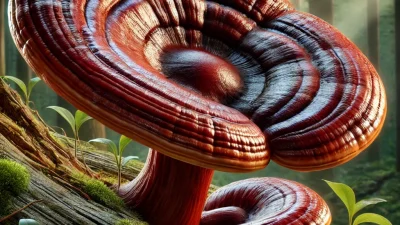
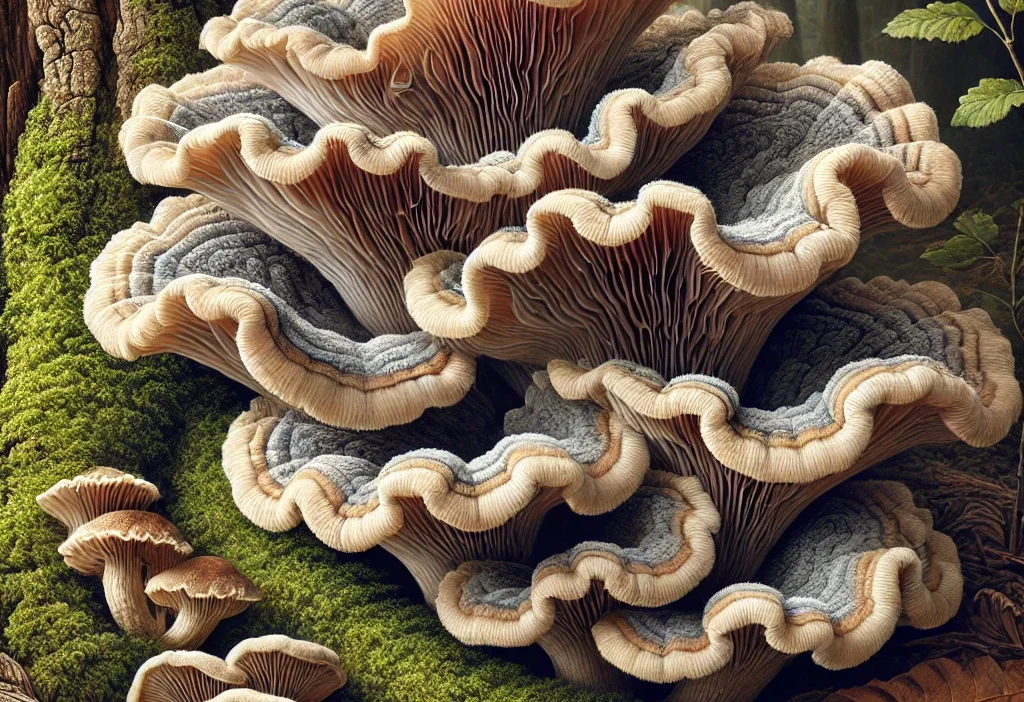
Maitake mushroom, scientific name Grifola frondosa, is a valuable mushroom species known for both its health benefits and taste.Originating from East Asia, especially Japan and China, this mushroom grows naturally in the lower layers of forests.Its name, which means “dancing mushroom”, comes from the fact that people danced happily when it was discovered.In this article, we will cover every aspect of Maitake mushroom, from its scientific features to its cultural significance.Scientific Name and Other Names The scientific name of Maitake mushroom is Grifola frondosa.This name determines its place in biological classification.The genus “Grifola” describes the leaf-like and multilayered structure of the fungus.”Frondosa” refers to the branched, leaf-like appearance of these layers.Maitake is a Japanese word meaning “dancing mushroom”.According to Japanese mythology, people who found this mushroom danced with joy, believing that they had found health and healing.In China, it is known as “hui shu hua” and has been used in traditional medicine for centuries.Regions Where Maitake Mushroom Occurs Grifola frondosa is naturally found in the forest areas of East Asia, Europe and North America.It is widely grown and consumed especially in Japan, China and Korea.In Turkey, it can be found naturally in the Black Sea and Marmara regions.Maitake mushrooms like to grow at the base of deciduous trees such as oaks, elms and chestnuts.This mushroom, which is cultivated both in nature and culturally, prefers moist and shaded areas.Physical Properties and Identification Maitake mushroom is known for its characteristic appearance and can be easily distinguished in nature.
- Hat Part: The hat structure is generally in brown tones and has a multi-layered and leaf-like appearance.Each layer is small and fan-shaped.
- Stem: Maitake’s stem is thick and branched.It spreads by starting from the bottom of the mushroom and branching upwards like an umbrella.
- Color: The outer surface of the mushroom has a color varying between light brown and gray.As it matures, it can take on dark brown tones.
- Size: Maitake mushrooms can be quite large and can be found in nature in clusters of 10-50 cm in diameter.
Thanks to these distinctive physical features, Maitake mushroomsIt can be easily recognized in forest areas.Growing Habitat and Season Maitake mushroom is suitable for growing in humid and cool climates, especially at the base of deciduous forests.It grows at the base of trees, on dead or rotting roots.Oak, beech, chestnut and elm species are its natural growth areas.These environments where the mushroom grows enable it to obtain the necessary nutrients from the roots and support its rapid growth.In terms of growing season, Maitake mushroom reaches its most productive period in the autumn months.It can be collected between September and November.However, thanks to controlled environments and greenhouses, it can be grown year-round, allowing consumers to access fresh Maitake in every season.Maitake Mushroom Benefits Maitake mushroom contains valuable components that offer many health benefits.Used in both traditional and modern medicine, this mushroom is seen as a natural source of health.Here are the main benefits of Maitake mushroom:
- Strengthens the Immune System: Thanks to the beta-glucans it contains, it provides protection against infections by increasing the body’s immune response.
- Regulates Blood Sugar: Maitake is known as a mushroom that helps balance blood sugar levels. In Japan and ChinaIt has been used to treat various health problems for hundreds of years.This mushroom has been the subject of various researches in the world of modern medicine and its contributions to health have been proven.In Japan, Maitake mushroom is the main ingredient in various traditional dishes.It is used in many dishes, from soups to steamed vegetables.Maitake, known as the “crisis mushroom” in Japanese culture, was considered as valuable as gold in ancient times.Maitake, which can also be consumed as tea in China, is seen as a health elixir.The Taste of Maitake Mushroom and Its Use in the Kitchen Maitake mushroom has a special place in kitchens with its rich and earthy aroma.Intense umami flavor adds depth to dishes.The flesh of the mushroom has a soft texture when roasted or steamed.Commonly used in the kitchen for:
- Soups and Stews: Adding mushrooms directly to soups adds flavor and nutritional value to dishes.
- Grilled and Sautéed Dishes: Maitake mushrooms, sautéed or grilled at high heat, are a great alternative to meat dishes.
- Salads: Lightly cooked Maitake adds a pleasant texture and taste to salads.
Cultivation and Cultivation in Turkey Maitake in TurkeyMushroom cultivation has attracted increasing attention in recent years.Especially the Black Sea and Marmara regions are areas with natural growth conditions for this mushroom.Its cultivation is carried out on specially prepared mushroom logs or straw compost.Maitake is also produced in some farms in Turkey and presented to the markets fresh.Interesting Facts and Surprising Facts
- Maitake mushroom was called “crisis mushroom” in Japan because the value of this rare mushroom was equated with gold.
- In Japan, MaitakeIt is frequently consumed by the elderly population due to its effects on health.
- Modern scientific research,It has been shown that Maitake mushroom has potential protective effects against cancer.
- Maitake mushroom is known as a natural immune system regulator thanks to the polysaccharides it contains.
The Ecological Role of Maitake Mushroom and Its Contribution to the Environment MaitakeMushrooms play an important role in forest ecosystems.It grows on the roots of trees and contributes to the recycling of decayed organic materials.This process enriches the soil and supports the sustainability of the forest ecosystem.Maitake mushroom cultivation is considered a sustainable agriculture method without disturbing the cycle of nature.Frequently Asked Questions About Maitake Mushroom In which regions does Maitake mushroom grow?Maitake mushroom grows naturally in Japan, China and North America.In Turkey, it is produced culturally in the Black Sea and Marmara regions.What are the health benefits of maitake mushroom?Maitake mushroom is a mushroom that supports the immune system, regulates blood sugar and cholesterol levels, and has antioxidant properties.How to cook maitake mushrooms?Maitake mushrooms can be used in soups, sautéed or grilled.Thanks to its fleshy and dense structure, it can be used in various dishes.Does maitake mushroom have any side effects?It is generally considered safe, but excessive consumption may lead to some allergic reactions.It is recommended to use it under the supervision of a doctor. The dried form is stable for a long time in airtight containers.How to grow Maitake mushroom?Maitake mushroom is a type of mushroom that loves moist environments and is grown culturally on oak or beech logs or special compost.This mushroom, which has been used in traditional medicine for centuries, is also known for its many health benefits in modern medicine.Grown in a wide range of environments, from natural environments to controlled production, Maitake offers a healthy and delicious alternative on the table with its nutritional properties…