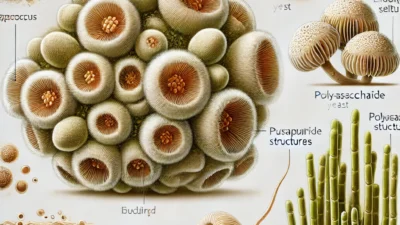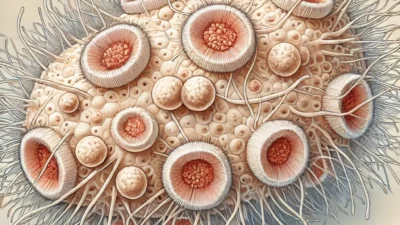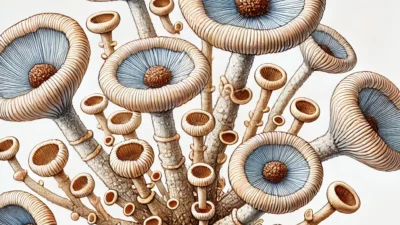
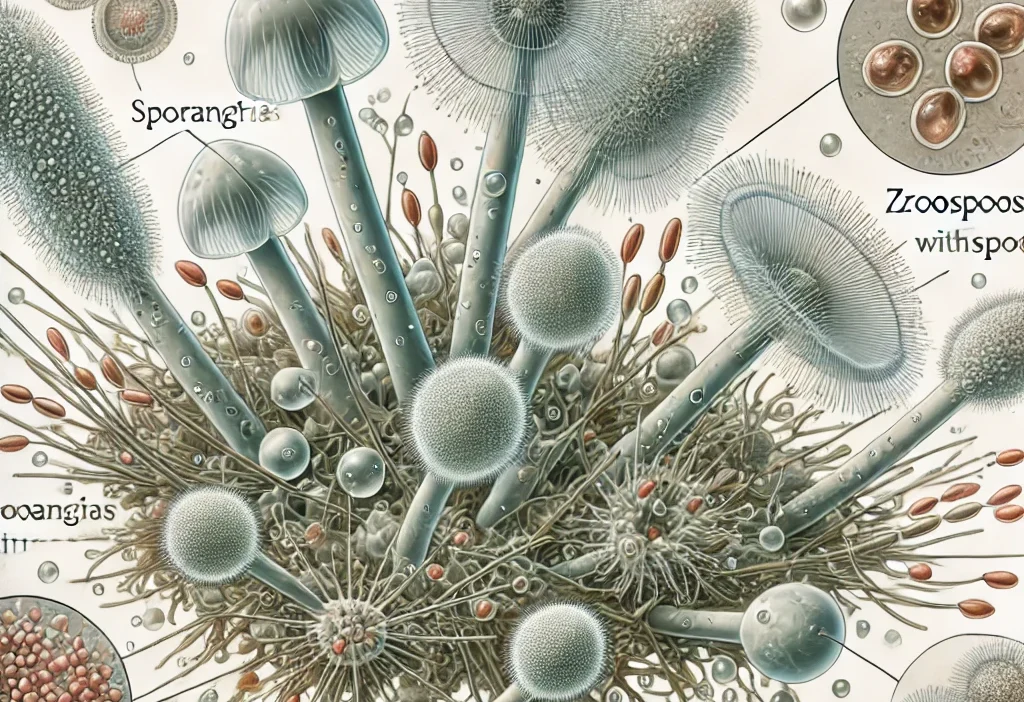
Oomycota is a group of microorganisms popularly known as “pseudofungi”.Although they look similar to mushrooms, they are biologically quite different from them.Oomycota are commonly found in aquatic environments or moist soils and are known to be serious pathogens of many plant species.They can cause various agricultural diseases such as potato mildew and fruit rot.In this article, we will present comprehensive information about Oomycota, from its scientific features to its habitat, from its effects on the ecosystem to its cultural importance.Scientific Name and Other Names This group, whose scientific name is Oomycota, is a member of the Protista kingdom and has a separate place from fungi in biological classification.Oomycota, commonly referred to as “water molds”, are not actually true fungi and that is why they are known as “pseudofungi”.This name comes from the fact that although they have similar characteristics to mushrooms, they have a different evolutionary origin.Some of the best-known species of Oomycota are Phytophthora infestans (the species that causes potato downy mildew) and Pythium.Regions Where They Occur and Their Physical Characteristics Oomycota are organisms that are widespread throughout the world and thrive in water-dependent or humid environments.They are frequently seen in aquatic ecosystems, ponds, streams and wetlands.In addition, moist soils and water-saturated grounds are breeding and spreading areas for these organisms.Oomycota can infect plant roots, leaves and stems, causing significant economic losses in agricultural areas.When examined under the microscope, the mycelial structure of Oomycota appears to be tubular and unsegmented.Their mycelia form a branched structure similar to mushrooms;However, their cell walls consist of cellulose and do not contain chitin, which is one of the main differences that distinguish them from true fungi.Oomycota produce flagellated spores called zoospores that are capable of locomotion.These zoospores can spread by swimming in the aquatic environment and thanks to this feature, they can quickly colonize aquatic environments.Thanks to their sports, they have the potential to spread over large areas under suitable conditions.Growth Habitat and Reproduction Mode Oomycota are organisms that prefer to grow in aquatic and moist environments.They can develop quickly in water-saturated soils, especially during the rainy season.Irrigation systems and heavy rainfall in agricultural areas facilitate the spread of these fungus-like organisms.They can develop in the root areas of plants and in water bodies and damage the root system of plants.Therefore, the spread of Oomycota-borne diseases may become a serious problem in agricultural production areas.Reproduction of Oomycota can be both sexual and asexual.During asexual reproduction, they form motile spores called zoospores.Zoospores spread by swimming in the aquatic environment and cause infection when they reach a suitable host.Sexual reproduction occurs through the union of structures called oogonium (female reproductive organ) and antheridium (male reproductive organ), and resistant oospores are formed in this process.Oospores are resistant to adverse environmental conditions and can germinate and form new mycelial structures when suitable conditions are provided.These modes of reproduction increase the ability of Oomycota to adapt to environmental changes.Season and Distribution Period of Oomycota Oomycota generally become more active in spring and autumn, when precipitation and humidity increase.During these periods, rainwater and floodwater facilitate the transport of spores, increasing the rate of spread.In agricultural areas, accumulation of water in the soil after heavy rains may pave the way for the spread of Oomycota infections. In summer months, growth rates may decrease as water evaporates and temperatures increase.It is of great importance to control diseases caused by Oomycota, especially in potatoes, tomatoes and other water-sensitive plants.Oomycota and Their Effects on Plants Oomycota are known as serious pathogens in plants and can cause great damage to agricultural production.One of the best-known Oomycota species, Phytophthora infestans, causes potato downy mildew, which caused major famines in Ireland in the 19th century.These and similar species can cause crop loss by causing rot on the roots of plants, lesions on the leaves and rot on the fruits.Oomycota infections usually manifest with the following symptoms:
- Root Rot: Oomycota can infect plant roots, causing root rot.This situation makes it difficult for plants to absorb water and nutrients and causes growth retardation.
- Leaf Spots: It shows symptoms as brown or black spots on the leaves and may cause the leaves to turn yellow and fall off.
- Fruit Rot: It can cause rotting and lesions especially in vegetables and fruits, thisIt also reduces the quality and market value of the products.
For the management of Oomycota infections, it is important to improve drainage systems in agricultural areas, use chemical fungicides and grow resistant plant species.Preventing the spread of these fungus-like organisms is of great importance, especially from an economic perspective.Interesting Facts About Oomycota
- Protist, Not Fungus: Although Oomycota resembles fungi in appearance, biologically it is a member of the protist kingdom, not a fungus.That’s why it’s called “false fungus”.
- Caused the Irish Potato Famine: Phytophthora infestans caused a major potato famine in Ireland in the 19th century.This famine led to the migration of millions of people and the death of thousands.
- Known as Water Molds: Because they live in aquatic environments and moist soils, Oomycota species are often known as “water molds.”
- Flagellate Spores: Oomycota have flagellaIt produces zoospores and these spores can move in the aquatic environment.This feature allows them to spread quickly in aquatic environments.
Frequently Asked Questions What are Oomycota?Oomycota are a group of protist organisms that have structures similar to fungi, but are biologically distinct from fungi.They live in moist and aquatic environments and are known as plant pathogens.How do Oomycota reproduce?Oomycota can reproduce sexually and asexually.In asexual reproduction, they produce motile zoospores, and in sexual reproduction, they produce resistant oospores.In which plants do Oomycota cause diseases?They can cause root rot, leaf spots and fruit rot in agricultural products such as potatoes, tomatoes, grapes and onions.How to control Oomycota infections?Chemical fungicides, improving drainage systems, and growing resistant plant species are important for controlling Oomycota infections.In which season are Oomycota more common?They become more active in spring and autumn, when rainfall and humidity increase.During these periods, they carry a greater risk of spreading in agricultural areas.Is Oomycota a fungus?Although Oomycota resemble fungi in appearance, they have a biologically distinct evolutionary origin from fungi and are classified as protists. They need to be carefully monitored in agricultural areas due to their water-dependent life and pathogenic effects on plants.Understanding the role of Oomycota in nature is important to increase agricultural productivity and maintain plant health…