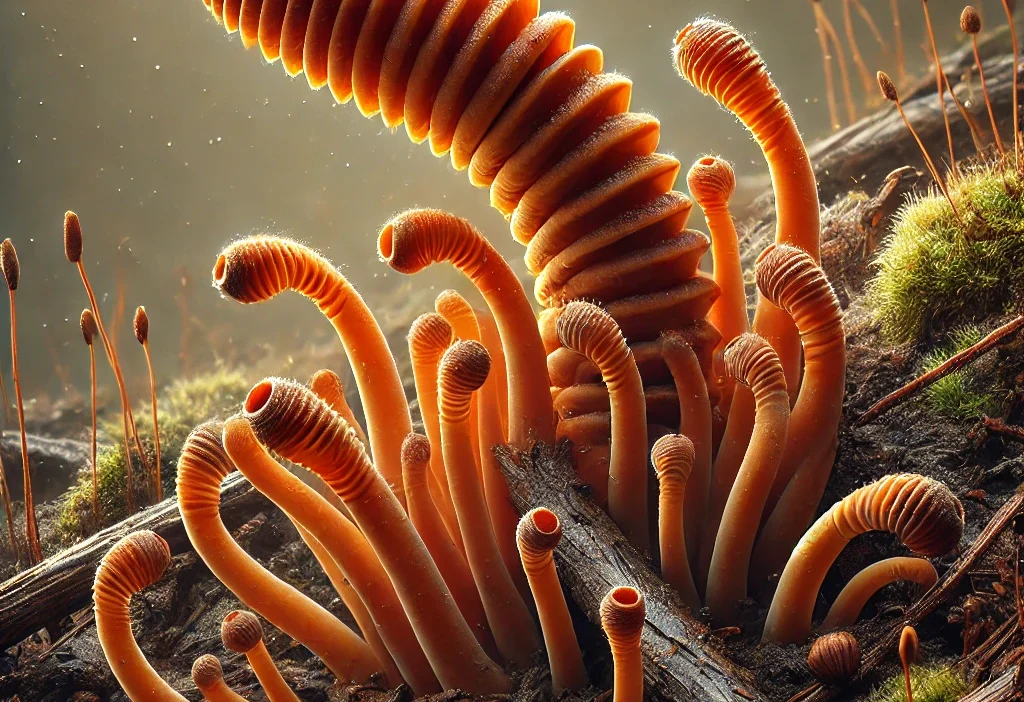
Cordyceps mushroom, scientifically known as Cordyceps sinensis, is one of nature’s most interesting and impressive mushroom species.This mushroom, which has been used as a source of healing in traditional Chinese medicine and Tibetan culture for centuries, has become popular around the world with its health benefits.In this article, we will examine every aspect of the Cordyceps sinensis mushroom in detail, from its scientific features to its growing conditions, from its cultural importance to its benefits.Scientific Name and Other Names Cordyceps sinensis is the scientific name of the Cordyceps mushroom and this name determines its place in classification.”Cordyceps” comes from the Greek words “cordyle” (stick) and “ceps” (head), referring to the appearance of the mushroom.”Sinensis” indicates that it is of Chinese origin.Cordyceps is known as “dong chong xia cao” in Asian culture, which means “insect in winter, plant in summer”.This name of the fungus comes from the fact that its life cycle is that it infects insect larvae, and then the fungus grows from these larvae.Regions Where Cordyceps Mushroom Occurs Cordyceps mushroom grows naturally mainly in the high mountainous regions of Asia, especially in the Himalayas, Tibet, Bhutan, Nepal and the high plateaus of China.It has a structure that can survive despite low oxygen levels at altitudes of 3000 to 5000 meters in these regions.Cordyceps sinensis is one of the rare mushroom species adapted to these high altitude and harsh living conditions.Since it is a rare and difficult to find naturally, it is an extremely valuable type of mushroom due to its high demand and limited availability.Physical Characteristics and Identification The appearance of the Cordyceps mushroom has very different and interesting features that distinguish it from other mushroom species.
- Parasite Life Cycle: In its life cycle, Cordyceps sinensis infects the body of certain insect species, especially butterfly larvae.The fungus enters the body of the larva, consumes it completely, and then grows outward from the larval corpse.
- Cape Part and Spore Production: The fungus forms a thin, cylindrical structure that emerges from the body of the larva, and this structureIt is the part that produces sports.This structure may be brown or orange in color.
- Size: It can generally be 5 to 15 cm long.It has a thin, cylindrical and slightly curved structure.
- Color: While the adult form is orange or brown in tone, the inner part is lighter, cream or yellowish in tone.
This unique appearance and parasitic life cycle make Cordyceps one of the most interesting fungal species in nature.Growing Habitat and Season Cordyceps sinensis mushroom prefers the cold and humid climates of high mountain areas.It begins to grow at altitudes above 3000 meters, especially in the spring and summer months when the snow begins to melt.The fungus first infects an insect larva and then grows inside that larva’s body.It takes a long time for the cordyceps mushroom to grow in its natural environment, and when the growth process is completed, the upper part of the mushroom rises to the surface of the ground and spreads its spores around.Due to the difficulty of finding it in its natural environment and limited growing conditions, studies have been carried out on its cultivation in laboratory environments in recent years.This artificial production offers a more accessible alternative to the high cost of natural Cordyceps mushrooms.Cordyceps Mushroom Benefits Cordyceps sinensis is a mushroom used, especially in traditional Chinese medicine, to increase energy levels, support the immune system and improve overall health. It provides more energy to the muscles by supporting ATP production.
- Cordyceps mushroom is called “natural gold” because it is rare in nature.
- Tibetans believed that Cordyceps had a slowing down effect on aging and they used this mushroom.They used it to extend lifespan.
- Mushroom, highIt has also been used to increase the energy levels of animals living at altitude.
- Modern scientific research shows that Cordyceps sinensis has potential anti-cancer properties.
- In China, the Cordyceps mushroom was once traded for gold.It was deemed valuable.
The Ecological Role of Cordyceps Mushroom and Its Effect on the EnvironmentContribution Cordyceps mushroom has an important role as a parasitic species in forest ecosystems.It contributes to the cycle of nature by keeping insect populations in balance.The natural growth of this species is important for the environment and biodiversity.However, natural populations of Cordyceps sinensis are endangered due to overcollection and habitat loss.The development of artificial cultivation methods can contribute to the sustainability of this rare mushroom species. This mushroom is found especially at altitudes above 3000 meters.What are the health benefits of cordyceps mushroom?Cordyceps mushroom has energy-boosting, immune-supporting and antioxidant properties.It supports heart health and also has positive effects on sexual health.How to consume Cordyceps mushroom?It is usually found dried and brewed into tea or used in soup.It has a slightly earthy taste.Does cordyceps mushroom have side effects?It is generally considered safe, but excessive consumption may cause stomach upset in some people.It is recommended for those with chronic diseases to use it under the supervision of a doctor.How should cordyceps mushrooms be stored?Dried Cordyceps mushrooms should be stored in airtight containers in a cool, dry environment.This way it can last for a long time.This method was developed as an alternative to the high cost of natural Cordyceps.Cordyceps sinensis (Cordyceps mushroom) is a type of mushroom that attracts attention with its unique life cycle and health benefits.Both its role in natural ecosystems and its place in traditional medicine make it unique.Modern science also supports the positive health effects of Cordyceps, and research is increasingly revealing the potential benefits of this mushroom.Cordyceps mushroom, as one of the most valuable healing resources offered by nature, offers an ideal option for those seeking a healthy life…