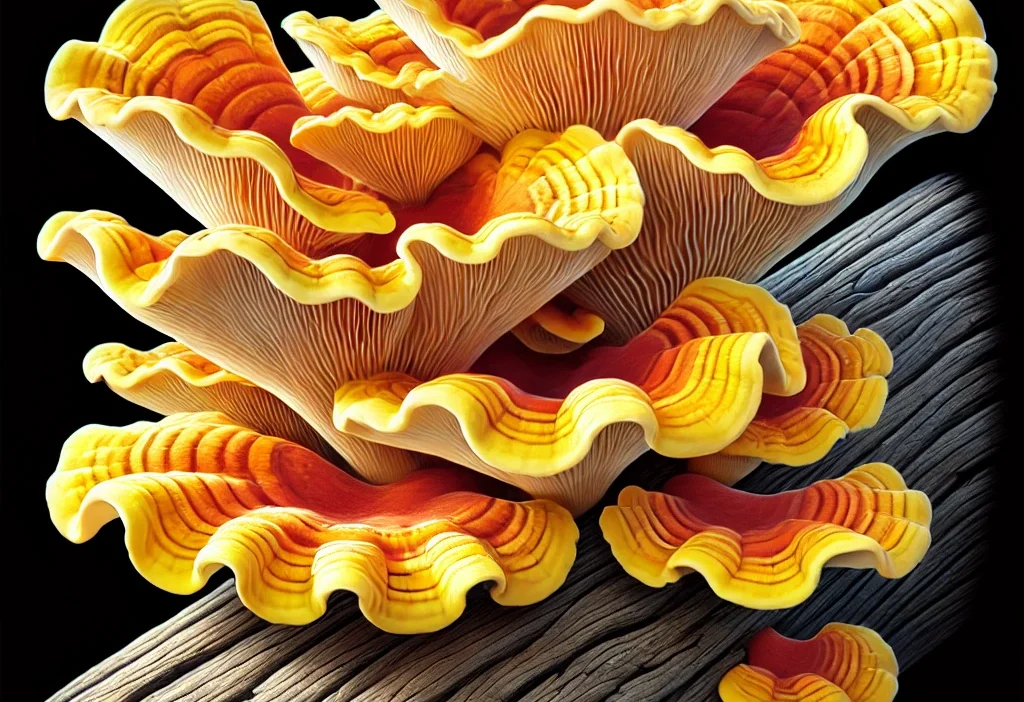
Chicken mushroom is a species that attracts attention in the mushroom world with both its appearance and taste.In nature, it displays an eye-catching appearance with its yellow and orange colors and is called this name because its taste is likened to chicken.This mushroom, whose scientific name is Laetiporus sulphureus, is found in many different regions and is very valuable gastronomically.Here are all the curious things about Chicken mushroom.Scientific Name: Laetiporus sulphureus The scientific name of chicken mushroom is Laetiporus sulphureus.The Laetiporus genus is known as woody fungi and is widespread throughout the world.The word sulphureus refers to the bright yellow and orange hues of the mushroom.This species is known as a parasitic fungus that grows especially on old trees and plays an important role in nature by slowly decomposing the tissue of the tree it hosts.Other Names Chicken mushroom is known by many different names.One of its most well-known names is “Chicken of the Woods”.This name comes from the fact that mushrooms have a texture and flavor similar to chicken meat when cooked.It is also known as “Yellow Mushroom” or “Tree Mushroom” in some regions.In Europe, it is called “Sulfur Shelf”, which refers to the sulfur yellow color of the mushroom.Regions Where It Occurs and Its Physical Characteristics Chicken mushroom can be found in many regions around the world.It is common in temperate forest areas of North America, Europe and Asia.It is especially common in forests with dense deciduous trees.It settles on the roots and trunks of broad-leaved trees such as oak, chestnut, poplar and cherry.The fungus grows on old or weakened trees and shortens the life of these trees, accelerating their decomposition process.Physically, Chicken mushroom has a large and layered structure.The hat part can usually be 10-30 cm in diameter, but in some specimens it can reach much larger sizes.The outer surface of the mushroom varies in color from bright yellow to orange, turning pale yellow as it ages.Its hat is flat or slightly curved and has a spongy texture.There are tube-like pores at the bottom, which is the structure through which the fungus spreads its spores.Growth Habitat and Season Chicken mushroom grows in humid and temperate climates, especially in forests with dense deciduous trees.It is naturally found on old trees, especially on the trunks of trees with hard leaves such as oak and chestnut.It is also frequently seen on dead or rotting tree stumps.The ideal environment for the growth of the fungus is cool and moist weather.Its natural growing season is from late spring to autumn.It is generally more abundant during the rainy season because high humidity is critical for the growth of the fungus.At the end of summer and early autumn, the mushrooms are at their most ripe and delicious.During this period, it is frequently sought by mushroom pickers in nature.Chicken Mushroom Cultivation Techniques and Challenges The spontaneous growth of chicken mushroom in nature limits its commercial cultivation.Since the fungus is a parasitic species, it develops directly on old or decaying trees.However, in recent years, it has begun to be cultivated to a certain extent using specially prepared mushroom logs.With this method, the freshness of the mushroom collected from nature is preserved by allowing the mushroom to grow in a controlled environment.However, this process is quite laborious compared to the natural growth process in nature.Interesting Information and Cultural Importance Chicken mushroom has a different place in nature and in the kitchen.It is known in many cultures for its edibility and taste. The similarity of taste of mushrooms to chicken meat allows them to be used as an alternative protein source in vegetarian and vegan recipes.The cultural importance of the mushroom is also reflected in traditional medical practices.In some cultures, Chicken mushroom is believed to strengthen the immune system and have anti-inflammatory properties.Therefore, it is used as a natural support against certain health problems.Usage Areas of Chicken Mushroom The uses of chicken mushroom in the kitchen are quite diverse.With its unique flavor and texture similar to chicken meat, it is used in soups, sautés, casseroles and even stir-fries.Thanks to its high protein content and low fat content, it also offers an ideal option for healthy nutrition.The fact that mushrooms become soft and juicy when cooked makes them attractive for those who prefer them as a meat alternative.The point to be considered when cooking chicken mushrooms is to use young and fresh mushrooms.Ripe or aged mushrooms may have a hard and fibrous structure.You can create different recipes using the hat and tube part of the mushroom.Its flavor is maximized, especially when sautéed with olive oil, garlic and spices.Chicken Mushroom and Health Benefits Chicken mushroom is a nutritious food that offers many health benefits.With its high protein content, it supports muscle development and accelerates energy metabolism.It is an ideal food for dieters with its low calories and high fiber content.Additionally, being rich in potassium, magnesium and B vitamins increases the nutritional value of mushrooms.With its antioxidant properties, it can strengthen the immune system by protecting the body from the harmful effects of free radicals.Additionally, it helps regulate the digestive system thanks to the beta-glucans contained in the mushroom.Being a natural anti-inflammatory, Chicken mushroom can reduce inflammation in the body and improve overall health.Cultural and Economic Value Since chicken mushroom is a mushroom collected from nature, it has an important economic value, especially for communities living in rural areas.It has become a valuable commercial product for local markets and restaurants in the regions where it grows naturally.Chicken mushrooms collected from nature are in high demand, especially in the organic food market.The commercial value of this mushroom is increasing day by day thanks to its taste and nutritional properties.Natural Life Cycle and Ecological Role Chicken mushroom plays an important role in the ecosystem by growing on old and decaying trees in nature.As a parasitic species, it contributes to the breakdown of dead trees by accelerating the decomposition process of the trees it hosts.This process supports the restoration of nutrients to the soil and the sustainability of the forest ecosystem.In this sense, chicken mushroom undertakes an important task in nature’s recycling system.Frequently Asked Questions About Chicken Mushroom (Laetiporus sulphureus) What is the taste of chicken mushroom?Chicken mushroom is known for its chicken meat-like texture and mild umami taste when cooked.Therefore, it can be used as a meat alternative in meals.How to collect chicken mushrooms?Chicken mushroom is usually found on the trunks of old trees in late spring and early autumn.It is easily noticed thanks to its bright yellow and orange colors.In which dishes are chicken mushrooms used?Mushrooms are used in soups, sautés, stews and even stir-fries.You can highlight its flavor by sautéing it with garlic and olive oil. It also has antioxidant properties.What is the growing environment of chicken mushroom?It grows in moist and temperate forests, especially on the trunks of deciduous trees such as oak and chestnut.Its natural environment is cool and rainy seasons.It is also a valuable product in the organic food market.Chicken mushroom (Laetiporus sulphureus) is one of the unique flavors offered by nature.It has a special place in kitchens and tables with both its taste and health benefits.This mushroom collected from nature is a blessing for mushroom hunters, especially in the autumn months.With its contribution to the natural life cycle and economic value, Chicken mushroom maintains its value both in the ecosystem and in the kitchen.If you come across this delicious mushroom in nature, it is recommended not to miss it…
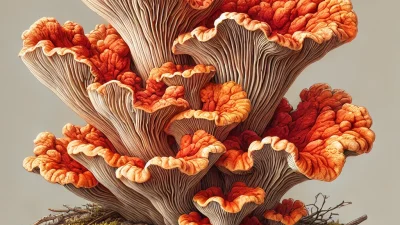
Lobster Mushroom (Hypomyces Lactifluorum)
Lobster mushroom is one of the interesting mushroom species you can encounter in nature, standing out with both its appearance and unique…