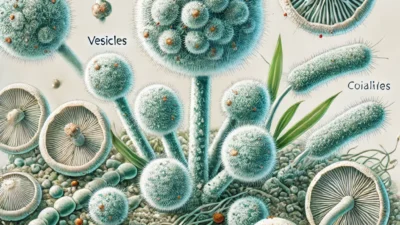
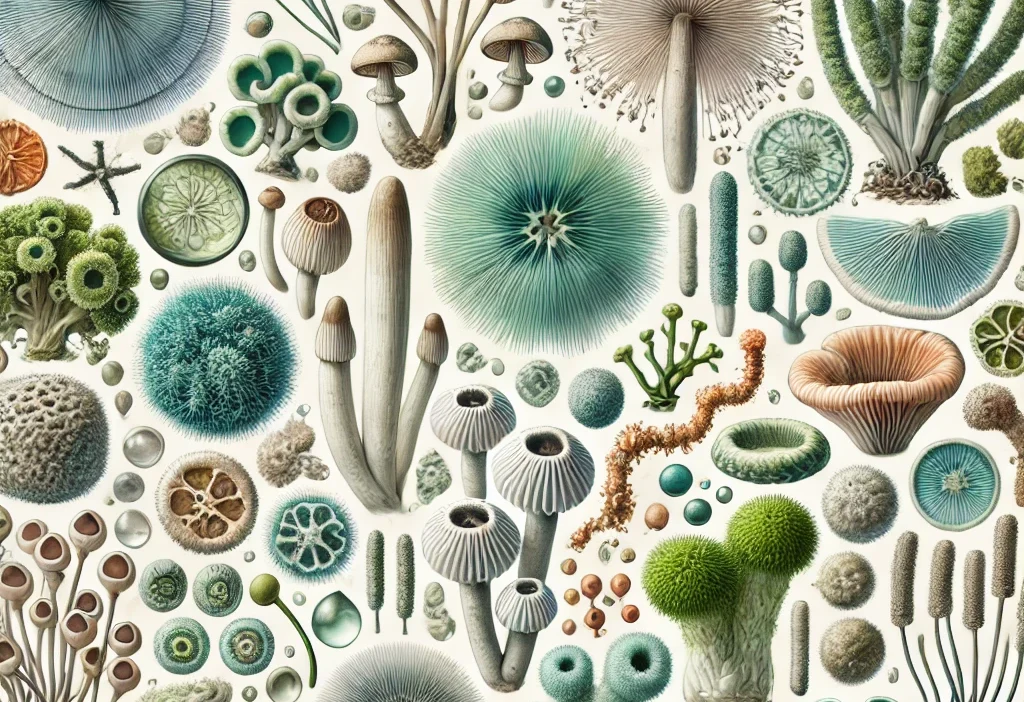
Penicillium species are mold fungi that are widely found in nature and play important roles in medicine, food and industry.This group of fungi, especially known as the source of penicillin, the first antibiotic, is of great importance not only in medicine but also in the production of various foods.In this article, we will discuss in depth all the details you need to know about Penicillium species, from their scientific features to their cultural importance.Scientific Name and Other Names Penicillium is a group of mold fungi that includes many species belonging to the Penicillium genus.The name of this genus of fungi comes from the Latin word “penicillus” meaning “brush”.This name was inspired by the brush-like appearance of the spore-producing structures of the fungus under the microscope.The most well-known species include Penicillium chrysogenum, Penicillium roqueforti, and Penicillium camemberti.The species Penicillium chrysogenum is the source of the famous antibiotic penicillin.Other species contribute to the food industry, especially by being used in cheese making.Areas of Occurrence and Physical Characteristics Penicillium species are widely found throughout the world.They grow rapidly in environments rich in moisture and organic matter.Soil, rotten plants, foodstuffs, wooden surfaces, and even damp indoor spaces are common places where this fungus occurs.It is easier for them to develop, especially in temperate and subtropical climates;However, they can also spread in moist indoor areas.Physically, Penicillium species are microscopic molds and typically form colonies that are green, blue-green or white.When examined under the microscope, spore-producing structures appear to have a brush-like structure.Spores develop at the tips of structures called conidia and are dispersed into the environment when mature.Colonies can spread rapidly, growing as a thin layer of mold on a flat surface.Growth Habitat and Reproduction Mode Penicillium species grow rapidly in nutrient-rich and moist environments.They are especially common on soil with high organic matter content, rotten plant residues, grains and fruits.In addition, they can easily reproduce on wood, fabric and wall surfaces with appropriate humidity in the home environment.A layer of blue-green mold on foodstuffs usually indicates the presence of Penicillium species.Penicillium is capable of asexual reproduction and reproduces through spores called conidia.These spores can easily spread through the air and rapidly form new colonies in suitable conditions.Since Penicillium spores are resistant to external factors, they can survive for a long time even in dry and harsh conditions.Season and Harvest Time of Penicillium Species Although Penicillium species do not have a specific season, they can reproduce faster under humid and hot conditions.For this reason, they are seen more frequently in open areas in spring and summer and in damp indoor areas in winter.Since certain Penicillium species are used in a controlled manner, especially in food processes such as cheese production, production is possible at any time of the year.However, the reproduction of these fungi in the natural environment may vary depending on temperature and humidity.Penicillium Species and Their Cultural Importance Penicillium species have great scientific and cultural importance.One of the most important discoveries is the antibiotic penicillin, obtained from the species Penicillium chrysogenum.Alexander Fleming’s discovery of this fungus in 1928 is considered one of the greatest discoveries of modern medicine and has revolutionized the treatment of bacterial infections. By using these species in the production of cheeses such as Roquefort, Camembert and Brie, the taste, texture and aroma of the cheese are improved.Another important use of Penicillium species is in the production of various enzymes and food processing processes.For example, enzymes produced by some Penicillium species are used in the food industry to break down starches and accelerate fermentation processes.Interesting Facts About Penicillium Species
- First Source of Antibiotics: Penicillin, obtained from Penicillium fungi, is considered one of the most important drugs of modern medicine and has saved the lives of millions of people.
- CheesesSecret: Penicillium roqueforti and Penicillium camemberti species create special flavors by creating the characteristic blue veins and aromas of cheeses.
- Enzyme Factory:Penicillium species produce amylase, pectinase and protease used in the food industry.It is widely used in the production of enzymes such as.
- Natural Biodegradation: Penicillium contributes to the biodegradation process by breaking down organic matter in nature and supports the nutrient cycle of soils.
Frequently Asked Questions What is Penicillium?Penicillium is a genus of mold fungi that is widespread throughout the world and includes several species.It breaks down organic substances in nature and is used in various industrial processes.In which areas is Penicillium used?Penicillium is used in the production of antibiotics (penicillin), cheese production, fermentation processes and enzyme production.It also has an important role in biotechnological applications.What are the harms of Penicillium?Some Penicillium species can cause respiratory allergies and food spoilage.However, it is generally beneficial thanks to its controlled use.How does Penicillium reproduce?Penicillium reproduces asexually by producing spores called conidia.These spores spread through the air and form new colonies under suitable conditions.In what environments does Penicillium thrive?Penicillium grows rapidly in environments that are moist, nutrient-rich, and abundant in organic matter.Decaying plants, soil and closed areas are places where this fungus is frequently found.In which cheeses is Penicillium used?Penicillium roqueforti is used in blue-ribbed cheeses such as Roquefort and gorgonzola, and Penicillium camemberti is used in white-rind cheeses such as Camembert and Brie.Penicillium species are an important group of fungi that attract attention with their biological roles in nature and industrial uses.In addition to having a key role in the development of modern medicine, they also have a special place in the world of gastronomy.They provide a wide range of benefits, from antibiotic production to cheese making, from environmental biodegradation to biotechnological applications.In this article, we discussed the various characteristics, habitats and cultural importance of Penicillium species in detail.Knowing Penicillium fungi is of great importance in terms of understanding the opportunities and potential risks they provide…