
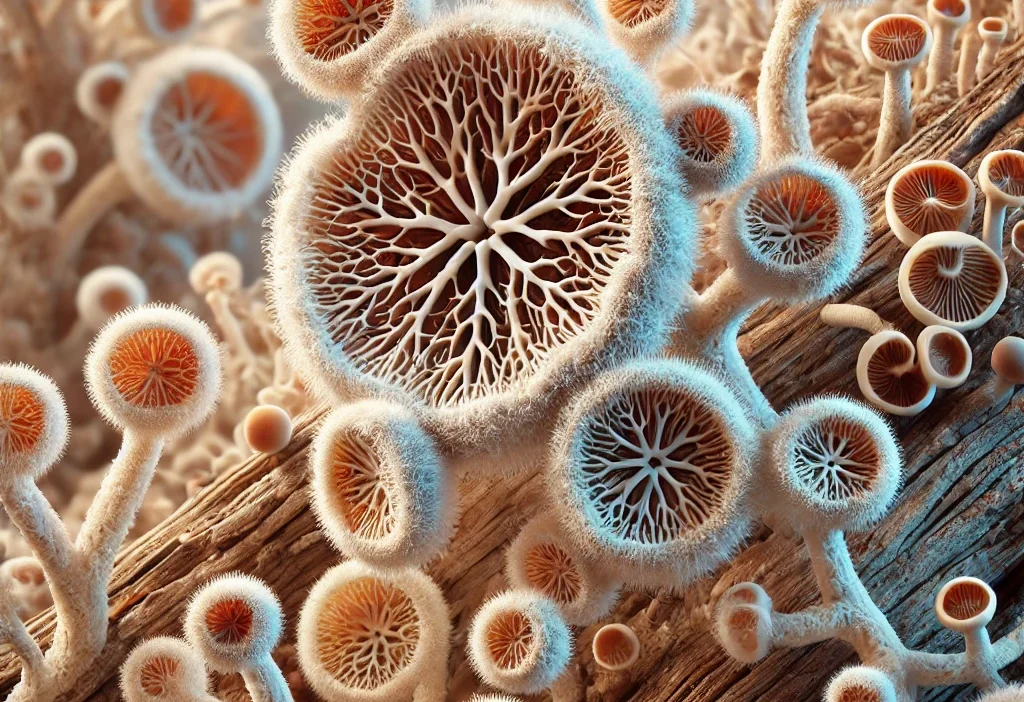
Ceratocystis fagacearum, commonly known as Oak Wilt Fungus, is a pathogen that causes fatal wilt disease in oak trees.This fungus has caused great losses in large forest areas, especially in the Americas.Oak wilt caused by Ceratocystis fagacearum poses a serious threat to both natural ecosystems and commercial wood production.The fungus infects the vascular tissues of oak trees, inhibiting water and nutrient transport, causing rapid wilting and death of the trees.Scientific Name and Other Names of Ceratocystis Fagacearum The scientific name of Ceratocystis fagacearum has an important place in the classification of the fungus.The genus name Ceratocystis refers to the microscopic structure of this fungus and the way it forms spores.The species name fagacearum is derived from the Latin word “fagus” meaning “oak” and indicates that the fungus mainly targets oak trees.This pathogen, colloquially referred to as “oak wilt fungus,” is commonly known as “Oak Wilt” in the United States.Regions Where Ceratocystis Fagacearum Occurs Ceratocystis fagacearum is especially common in the United States, where it has caused serious losses in oak forests.The fungus was first described in the 1940s and has since spread rapidly throughout the eastern, central, and southern regions of the United States.It has caused massive oak deaths, especially in states such as Minnesota, Wisconsin, Michigan and Texas.Although not common in regions outside North America, the fungus has the potential to spread to new regions through global trade and climate change.Physical Characteristics of Ceratocystis Fagacearum Ceratocystis fagacearum is recognized by its hyphal structures and spore-forming organs when examined under the microscope.The spores of the fungus have a microscopic structure and are hyaline (transparent) and colorless.The fungus colonizes the vascular tissues and forms structures that block the vascular system of the plant.On infected trees, brown spots or rings may be observed when sectioned.These symptoms indicate the spread of the fungus in plant tissue and the way it blocks water flow by blocking vascular bundles.Growing Habitat and Season of Ceratocystis Fagacearum Ceratocystis fagacearum is more active in humid and temperate climates.Spores of the fungus can spread through insects and root connections.In spring and summer, the risk of spreading the fungus increases as temperatures rise and insects become active.Flooded and injured tree trunks, in particular, serve as entry points for the fungus.The fungus can also easily enter through parts of trees that have been injured during cutting or pruning.High humidity and temperature promote the rapid spread of the fungus, causing the infection to quickly spread over large areas.Diseases Caused by Ceratocystis Fagacearum Oak wilt is the most prominent disease caused by Ceratocystis fagacearum.This disease infects the conductive tissues in the tree’s roots and branches and prevents the transport of water throughout the plant.As a result, trees quickly show signs of wilting and begin to lose their leaves.Oak trees are particularly susceptible to this disease, and symptoms of infection can often lead to the death of trees within a few weeks.The disease progresses more rapidly in trees in the red oak group, while trees in the white oak group are infected more slowly and in some cases may be resistant to the disease.Treatment Methods of Ceratocystis Fagacearum Oak wilt fungus is difficult to treat, and therefore prevention strategies are of great importance. Additionally, not cutting or pruning trees in spring and summer can reduce the risk of infection.Cutting root connections around trees is also an important method to stop the spread of the fungus.Interesting Facts About Ceratocystis Fagacearum
- Ceratocystis fagacearum tends to be spread by insects.Some species of insects, especially those that feed on the sap of oak trees, carry spores of the fungus from one tree to another.
- Oak wilt caused by the fungus led to the destruction of large oak forests in America in the mid-20th century.
- In nature, Ceratocystis fagacearum can infect not only oak trees but also some other hardwood tree species, although these trees are not as susceptible as oaks.is not.
Cultural Significance of Ceratocystis Fagacearum Oak wilt caused by Ceratocystis fagacearum has been a serious threat to forest ecosystems and the wood industry in North America.Oak trees have great value both ecologically and economically.The death of oak trees, which are a source of shelter and nutrition in forests, also affects many animal species.Additionally, oak wood is widely used in furniture making and various industries.Losses caused by fungi can negatively affect regional economies and disrupt ecosystem balances.What is Ceratocystis Fagacearum? Ceratocystis fagacearum is a type of fungus that causes fatal wilt disease in oak trees.This disease, known as oak wilt, causes trees to rapidly lose water and become pale as a result of the fungus infecting the transmission tissues.The red oak group, in particular, is highly susceptible to this disease, and the infection can cause the death of trees in a short time.The spread of the fungus through insects and root connections makes the disease difficult to control.Frequently Asked Questions In which trees does Ceratocystis fagacearum cause disease?It most commonly causes disease in oak trees, but can also infect some other hardwood trees.How is Ceratocystis fagacearum spread?The fungus can spread through insects, through root connections, and from injured trees.What are the symptoms of Ceratocystis fagacearum?Infected trees drop their leaves, appear brown spots on their branches, and rapidly show signs of wilting.Does Ceratocystis fagacearum harm humans?No, Ceratocystis fagacearum does not harm humans;however, it poses a serious threat to forest ecosystems and the wood industry.How can Ceratocystis fagacearum be prevented?Rapidly cutting down infected trees, pruning at regular intervals, and cutting root connections are effective to prevent spread.What are the economic effects of oak wilt fungus?The fungus can cause the loss of oak trees in forested areas, leading to major losses in wood production and ecosystem services.Ceratocystis fagacearum is a dangerous fungus that poses a serious threat to the health of oak trees and forest ecosystems.Oak wilt disease can spread rapidly, especially in red oak groups, leading to loss of forest areas.Therefore, intense efforts are being made by agricultural experts and forest management units to control the spread of the fungus and prevent the spread of the disease.Fighting fungi is an important step to protect our forests and maintain ecological balance…