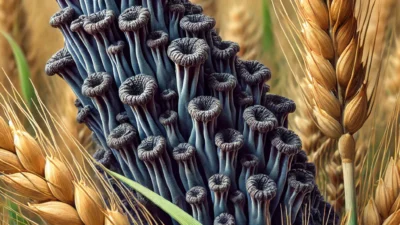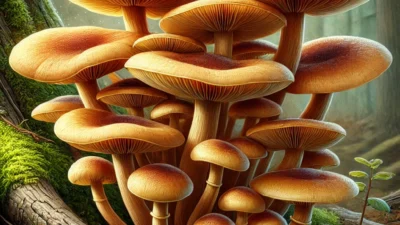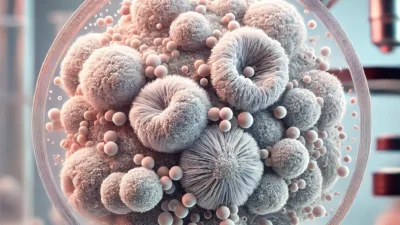
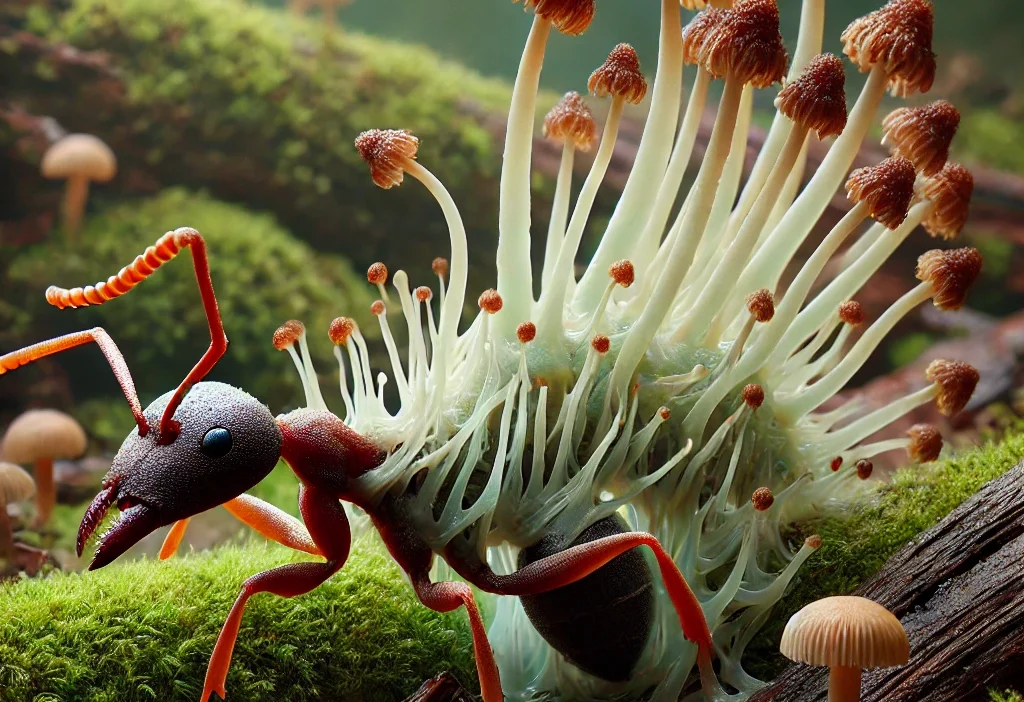
Ophiocordyceps unilateralis, commonly known as the “Ant Zombie Mushroom”.This fungus is a very unusual example in the world of biodiversity and stands out for its parasitic lifestyle.It is best known for its ability to infect and control ants.This mushroom reveals one of nature’s mysterious and complex interactions.In our article, we will discuss many aspects of Ophiocordyceps unilateralis, from its scientific features to its cultural importance.What is Ophiocordyceps unilateralis? Ophiocordyceps unilateralis is a type of parasitic fungus belonging to the Ascomycota phylum.This fungus specifically targets ants living in tropical forest ecosystems and controls them by infecting them.Ant Zombie Fungus can hijack the ant’s nervous system and change the ant’s behavior to its advantage.Due to these features, it is a type of mushroom that attracts attention in nature and is frequently discussed in the world of popular science.Scientific Name and Other Names of Ophiocordyceps unilateralis This fungus, whose scientific name is Ophiocordyceps unilateralis, is often called “Ant Zombie Mushroom”.This name comes from the fungus’ controlling effect on ants.The fact that the fungus changes the behavior of ants after infecting them makes it seem like a “zombie creator”.With this aspect, it has attracted the attention of both biologists and nature documentaries, and has even found a place in popular culture.Regions Where Ophiocordyceps unilateralis Occurs Ophiocordyceps unilateralis is generally found in tropical forests.The natural habitat of this fungus includes dense forest cover and humid climates.South America, Africa and Southeast Asia are regions where the fungus is common.Especially the Amazon Forests of Brazil are one of the places where this type of mushroom is frequently encountered.The fungus, which develops in humid, temperate climates, finds habitat in areas where ant populations are dense.Physical Characteristics of Ophiocordyceps unilateralis The physical structure and development of the Ant Zombie Fungus is unique and it is quite interesting to watch the process by which it infects the ant:
- Mycelium and Spores: Fungus,After entering the ant’s body, it develops its mycelium inside.The mycelium spreads into the ant’s muscle tissues and takes control.The infected ant behaves as if following the instructions of the fungus.
- Fungal Structures: When the ant dies and clings to a leaf with its jaw muscles, the fungus forms a stalk extending out from the ant’s head.This stalk allows the spores of the fungus to spread into the environment.The stalk is usually brown or black in tone.
- Spore Production: Spores form at the tip of the stalk and are transmitted to other ants with the help of wind or rain.This process is a critical step for the fungus to continue its life cycle.
Growing Habitat and Season of Ophiocordyceps unilateralis Ant Zombie Mushroom thrives in tropical forests with high humidity.It becomes especially active during the rainy season and spreads its spores, infecting new ants.The life cycle of this fungus is closely related to the density of ant populations in the region and seasonal rainfall.The rich vegetation of the rainforest provides an ideal environment for the fungus to spread.Ants contribute to the spread of the infection by carrying the spores of the fungus.Interesting Facts about Ophiocordyceps unilateralis
- Ant Zombification: After the fungus infects the ant, it directs it to an ideal place for itself. This behavior is the best way to spread the spores of the fungus.provides the appropriate environment.
- BiologicalControl: The fungus may be a natural counterbalance to the control of ant populations.Movies and TV series have been inspired by the biological effects of this fungus.
Cultural Importance of Ophiocordyceps unilateralis The cultural importance of the Ant Zombie Mushroom is related to the interesting life cycle it shows in biology and nature documentaries.This mushroom reveals the complex and sometimes chilling side of the natural world.The effects of the fungus on ants have been a source of inspiration in science fiction and horror genres.In nature documentaries, the controlling ability of this fungus on ants is presented as an example that fascinates the audience and at the same time shows the cruel side of nature.These “zombie”-like effects of the fungus also feed into people’s fear and fascination with nature.The life cycle of Ophiocordyceps unilateralis has become a metaphor for the power and complexity of nature.Consumption of Ophiocordyceps unilateralis and Things to Consider Direct consumption of this mushroom by humans is not recommended.Ophiocordyceps unilateralis is a type of fungus that is parasitic only on ants and develops within their tissues.However, other species of this mushroom belonging to the “Cordyceps” family are used in traditional medicine and as supplements.Species such as Cordyceps sinensis are used to support the immune system and increase energy levels.However, unlike these species, Ophiocordyceps unilateralis is not poisonous or suitable for medical use.The Role of Ophiocordyceps unilateralis in Nature Ophiocordyceps unilateralis plays an important role in terms of ecological balance in nature.By controlling the population of ants, it ensures diversity and balance in the forest ecosystem.The fungus’s mechanisms of propagation and dispersal of its spores, combined with its ability to manipulate ant behavior, provide a good example of the complex relationships in nature.This mushroom shows how nature can maintain balance within itself and how complex the interactions between different species can be.In particular, ecosystem scientists and biologists obtain in-depth information on symbiotic and parasitic relationships in nature by examining the life cycle of this species.Ant Zombie Mushroom and Scientific Research In the scientific world, research on Ophiocordyceps unilateralis has provided important data on parasite-host relationships.The mechanism by which the fungus affects the ant’s nervous system and changes its behavior is of interest for neurological studies beyond biology.The discovery of chemicals produced by fungi provides important clues about how such interactions occur and reveals the biochemical diversity of nature.The Importance of Ophiocordyceps unilateralis and Its Place in Nature Ophiocordyceps unilateralis (Ant Zombie Mushroom) is an important key to understanding the complex dynamics of nature.Its parasitic nature and effect on ants indicate the unique position of this fungus in biodiversity.Within the finely crafted balance of nature, the role of this fungus is a reminder of the complexity of ecosystems and the interconnectedness of every living thing.Frequently Asked Questions What is Ophiocordyceps unilateralis?Ophiocordyceps unilateralis is a type of parasitic fungus that infects ants and can control their behavior.Where does the Ant Zombie Fungus live?It is usually found in tropical forests and is common in humid regions such as South America, Africa and Southeast Asia.Does Ant Zombie Mushroom harm humans?No, this fungus only infects certain species of ants and has no direct harm to humans.It remains in this state until the ant dies and the spores of the fungus are released.What is the role of Ophiocordyceps unilateralis in nature?By controlling ant populations, it maintains balance in the forest ecosystem and contributes to biodiversity.Why is this mushroom called “zombie”?The fungus is called the “zombie mushroom” because it controls the behavior of the ant and makes it move as the fungus wants…