
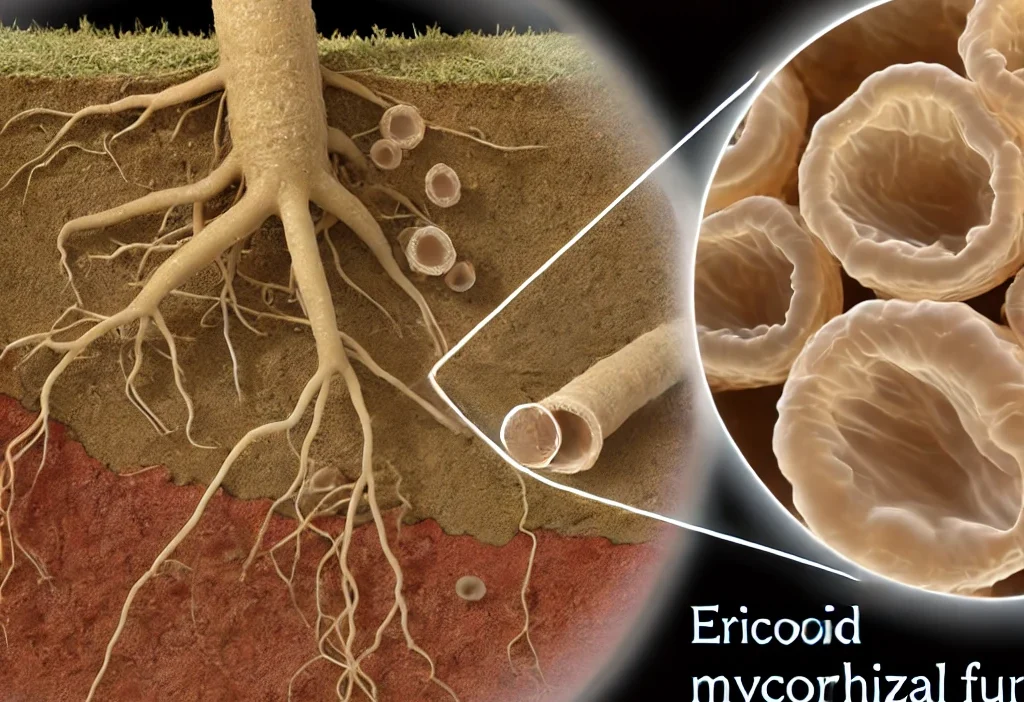
Ericoid mycorrhizal fungi are a special group of fungi that establish symbiotic relationships with the roots of plants and support their nutrient uptake.They are of great importance for the survival of plants, especially in acidic soils and nutrient-poor environments.The symbiosis formed by ericoid mycorrhizal fungi occurs in close contact with plant roots, allowing plants to access water and nutrients more effectively.These fungi play an important role in biological cycles in nature and agricultural practices.Here are all the details you need to know about ericoid mycorrhizal fungi!Scientific Name and Other Names of Ericoid Mycorrhizal Fungi The scientific name of ericoid mycorrhizal fungi is generally associated with species belonging to the phylum Ascomycota and in the order Helotiales.These fungi are also commonly known as “ericoid mycorrhizas” or “ericoid root symbiosis.”The term “ericoid” is derived from the special symbiotic relationship these fungi form with plants, especially those from the Ericaceae family.Ericoid mycorrhizal fungi attract attention with these special root structures that enable plants to survive in acidic and nutrient-poor soils.Regions Where Ericoid Mycorrhizal Fungi Occur Ericoid mycorrhizal fungi are common in regions with acidic soils throughout the world.They are found especially in tundra, swamps and peatlands, mountainous regions and heather ecosystems in the northern hemisphere.They are also common in high altitude and low nutrient soils, such as tropical montane forests.Forest areas and high-altitude mountainous areas in the Black Sea Region of Turkey constitute the natural habitat of these mushrooms.Other areas where these fungi are commonly found include the peatlands of Scandinavia, the tundra of Canada and the heathlands of Britain.What these habitats have in common is their highly acidic structure and being rich in organic matter but poor in nutrients.Ericoid mycorrhizal fungi increase the survival chances of plants in such harsh environmental conditions.Physical Characteristics of Ericoid Mycorrhizal Fungi The physical structures of ericoid mycorrhizal fungi are different from other mycorrhizal fungi species.These fungi, most of which are microscopic, form thin filamentous structures called hyphae that spread in and around plant roots.These hyphae penetrate into the root cells and form structures that enable nutrient exchange between the plant and the fungus.One of the most distinctive features of ericoid mycorrhizal fungi is that they form a “network of ericoid hyphae” in the epidermal cells of plant roots.When examined under the microscope, it is seen that these fungi enter the cells inside the plant roots and form thin branched structures in the root cells.These structures help the plant absorb more nitrogen, phosphorus and other minerals from the soil, while also allowing the fungus to obtain carbohydrates from the plant.Thus, a symbiotic relationship based on mutual benefit is formed.Growing Habitat and Season of Ericoid Mycorrhizal Fungi Ericoid mycorrhizal fungi are generally found in acidic, organic matter-rich but nutrient-poor soils.Heathlands, peatlands, forest floors and high-altitude mountainous areas are ideal habitats for these mushrooms.The periods when these fungi are actively active are spring and autumn, when soil moisture increases.During these periods, the rate of organic matter in the soil increases and as the growth period of plants begins, the symbiotic relationship of fungi with plant roots becomes stronger. These fungi, which can remain active during the winter months, make plants more resistant to cold stress.The Role of Ericoid Mycorrhizal Fungi on the Ecosystem Ericoid mycorrhizal fungi play an important role in the functioning of ecosystems and the preservation of biodiversity.Thanks to the symbiotic relationship they establish with the roots of plants, they enable the plant to more effectively absorb nutrients such as nitrogen and phosphorus, which are available in limited amounts in the soil.This feature is especially vital for plants growing in nutrient-poor soils.One of the most important contributions of these fungi to the ecosystem is their ability to improve soil structure and accelerate the breakdown of organic matter.During the decomposition of organic matter, ericoid mycorrhizal fungi accelerate the nitrogen cycle in the soil, thus creating a more usable nitrogen source for plants.This helps keep ecosystems in balance by supporting plant growth in woodlands and peat ecosystems.Agricultural and Economic Importance of Ericoid Mycorrhizal Fungi Ericoid mycorrhizal fungi also have an important place in agricultural terms.These mushrooms are indispensable for plants such as blueberries, tea and rhododendron, especially those that grow in acidic soils.Thanks to the use of ericoid mycorrhizal fungi in agricultural production, these plants can grow healthily even in soils that are not rich in nutrients.This provides a significant advantage to farmers who cultivate such plants.In tea farming countries and blueberry production, the use of these mushrooms is used as an important method to increase productivity.Ericoid mycorrhizal fungi strengthen the root system of plants, making them more resistant to stress conditions.It also supports environmentally friendly agricultural practices by reducing the use of chemical fertilizers.Interesting Facts and Cultural Importance Ericoid mycorrhizal fungi have played an important role in natural ecosystems for many years.People have benefited from plants grown with the help of these fungi, even in the harsh conditions of acidic soil.Particularly societies living in Northern Europe observed the plants growing in shrublands and the relationships of these plants with symbiotic fungi and carried this knowledge into agricultural practices.Nowadays, with increasing environmental awareness, the ecological benefits provided by ericoid mycorrhizal fungi are becoming more appreciated.Environmentally friendly agricultural practices and organic production methods have made the use of these mushrooms widespread.The use of ericoid mycorrhizal fungi is seen as an important part of efforts to maintain soil health and support biodiversity.Ericoid mycorrhizal fungi form a unique symbiotic relationship that allows plants to survive in acidic and nutrient-poor soils.The role of these fungi in ecosystems, their potential to increase productivity in agriculture, and their cultural significance show how important they are in the complex workings of nature.In the future, greater steps can be taken in sustainable agriculture and ecosystem management by using these mushrooms more widely.Frequently Asked Questions What are ericoid mycorrhizal fungi?Ericoid mycorrhizal fungi are a special group of fungi that establish a symbiotic relationship with plant roots, allowing them to survive in acidic and nutrient-poor soils. Where are ericoid mycorrhizal fungi found?It is widespread throughout the world, especially in tundra, peatlands, mountainous regions and shrublands with acidic soils.It is located in the Black Sea Region of Turkey.What are the benefits of ericoid mycorrhizal fungi to plants?These fungi enable plants to absorb water and nutrients more efficiently and increase the resistance of plants to stress conditions.Why are ericoid mycorrhizal fungi important in organic farming?It provides an environmentally friendly fertilization method and protects soil health by reducing the use of chemical fertilizers…

Scutellospora Species (Scutellospora)
Scutellospora species, an important group of mycorrhizal fungi, are known for the symbiotic relationships they establish with the roots of…

